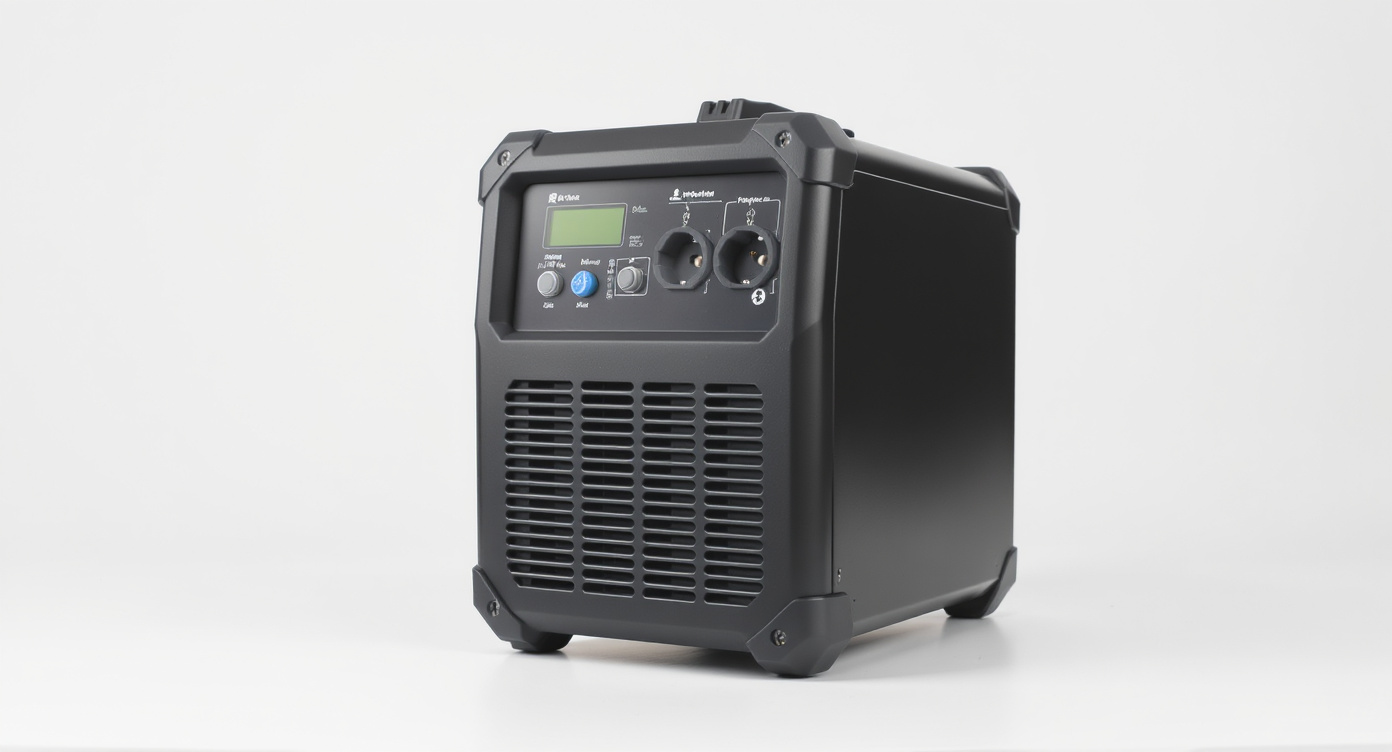
Here’s a question that lands in solar forums every single summer: can a solar generator power an air conditioner? The short answer is yes — but with conditions that matter a lot. The longer answer involves understanding what your AC unit actually demands, what your solar generator can realistically deliver, and where the two need to meet in the middle. Let’s walk through exactly that, so you’re not left sweating through a setup that almost works.
The Quick Answer (For Featured Snippet Readers)
Yes, a solar generator can power an air conditioner, provided it has sufficient watt-hours of battery capacity (typically 2,000 Wh or more), a high enough continuous output wattage (at least 2,000W for most window units), and a strong enough surge/peak wattage rating (often 4,000–6,000W) to handle the AC compressor’s startup spike. Smaller units like 5,000 BTU window ACs are the most compatible; central air systems require much larger setups.
What Makes Air Conditioners So Demanding on a Power Source?
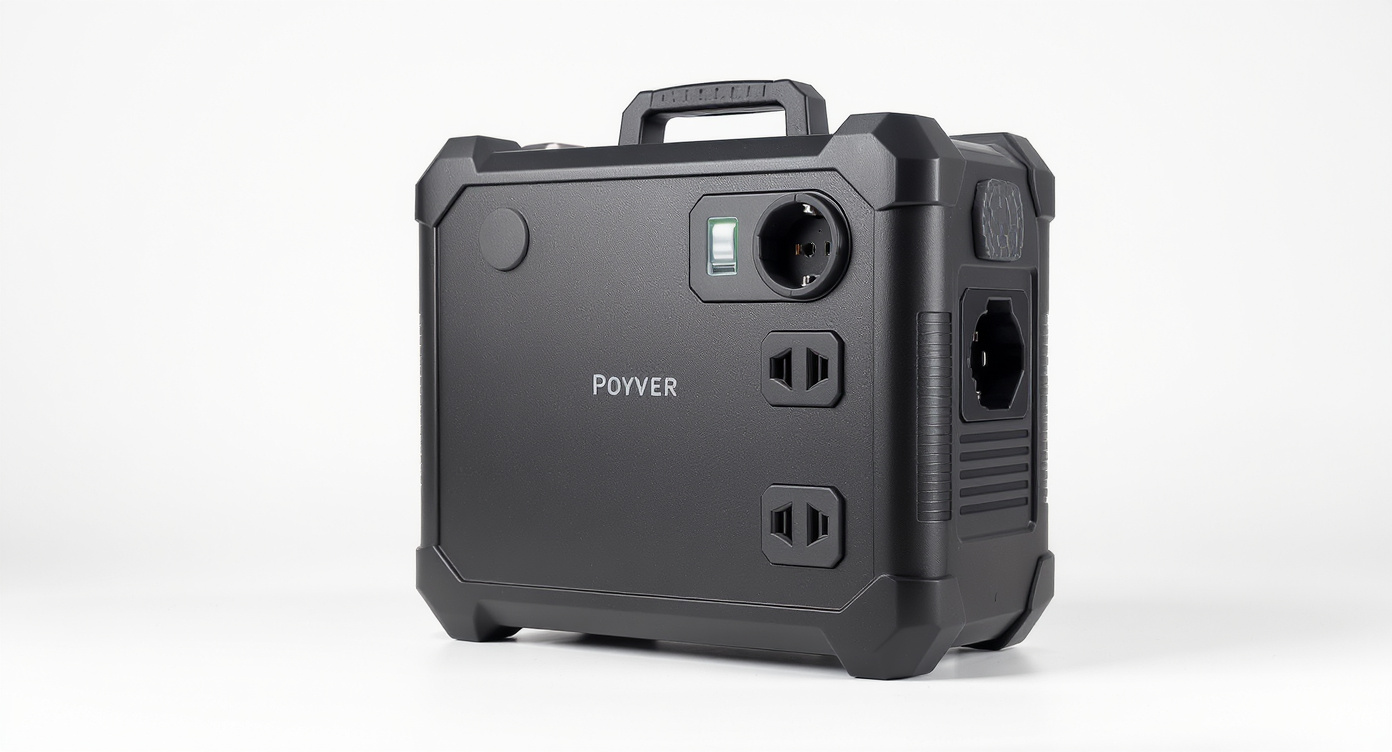
Air conditioners are among the most electrically hungry appliances in any home or RV, and that’s not because they run inefficiently — it’s because of how compressors work. A compressor motor (the component that actually pumps refrigerant and cools your space) needs a significant burst of electricity to start up, often two to three times what it draws once it’s running steadily. That startup demand is called surge wattage (the peak power a device needs for a fraction of a second when it first kicks on), and it’s the number that trips up a lot of buyers who only look at continuous wattage ratings.
Think of it like this: a compressor starting up is similar to a car engine cranking over in cold weather — it needs a lot more effort to get going than it does to keep going. If your solar generator’s inverter (the component that converts stored DC battery power into the AC electricity your appliances use) can’t handle that momentary spike, the unit will either trip a protection circuit or fail to start the AC entirely. This is why surge wattage is arguably the most important spec to check before connecting any air conditioner to a solar generator.
Breaking Down the Numbers: What Size Solar Generator Do You Need?
Air conditioner wattage varies significantly by type and BTU rating. Here’s a realistic breakdown:
- Small window unit (5,000–6,000 BTU): Roughly 450–600W running, with a startup surge of 1,200–1,800W
- Medium window unit (8,000–10,000 BTU): Roughly 700–1,200W running, with a startup surge up to 2,400–3,600W
- Large window unit (12,000–15,000 BTU): Roughly 1,200–1,800W running, with surges potentially reaching 4,500–5,400W
- Mini-split (single zone, 9,000–12,000 BTU): Often 700–1,100W running; inverter-driven mini-splits have much lower surge requirements and are far more solar-generator-friendly
- Central air system: Typically 3,000–5,000W running — generally not practical for most portable solar generators without a very large, multi-unit battery bank
For choosing the right solar generator size, the rule of thumb is: multiply the AC’s running wattage by the number of hours you want to run it, then add a 20–30% buffer for inverter efficiency losses. A 5,000 BTU window unit running for four hours needs roughly 2,000–2,400 Wh of usable battery capacity at minimum — and that’s before you factor in anything else you might be running simultaneously.
Does Solar Input Matter While the AC Is Running?
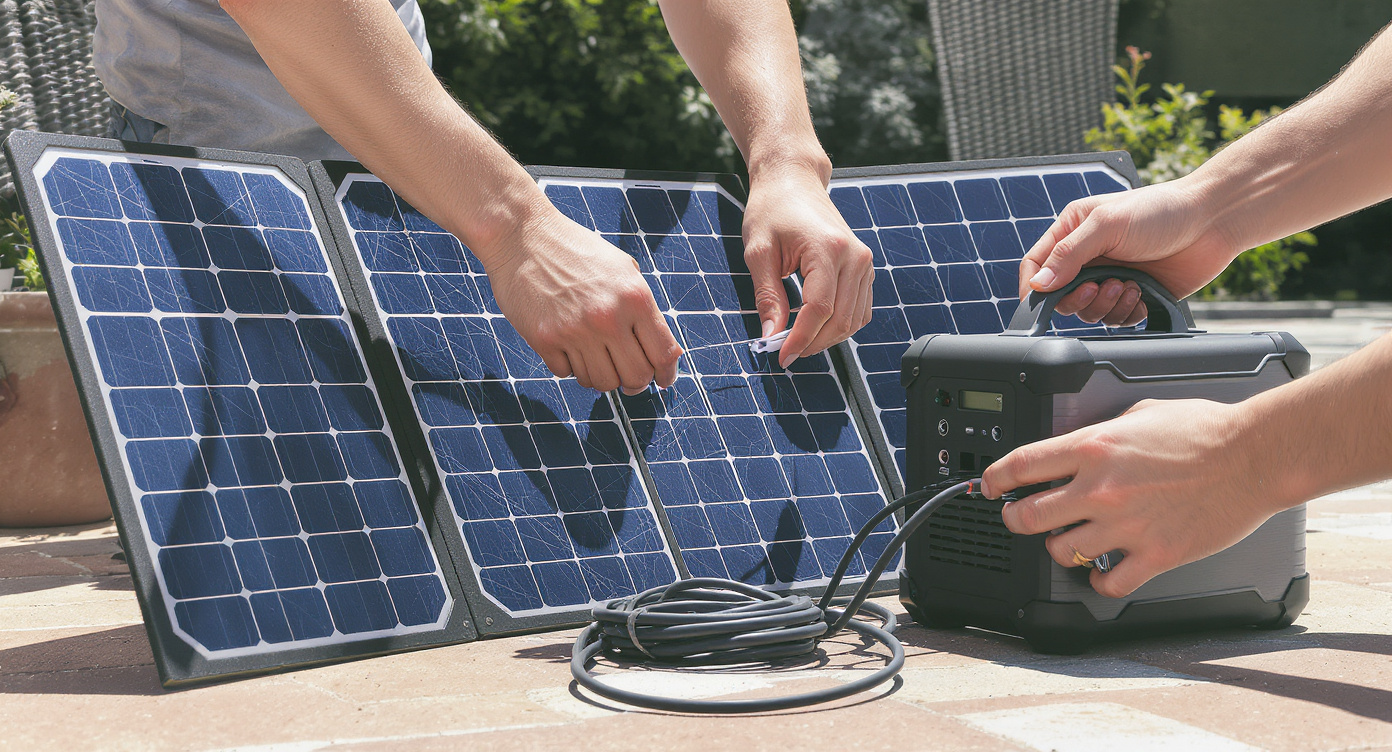
This is a question buyers often overlook. Your solar generator’s battery is doing the heavy lifting, but if solar panels are actively charging while the AC runs, they offset how fast the battery depletes. A 200W solar input while running a 600W AC unit means you’re only drawing a net 400W from the battery — which meaningfully extends runtime. On a sunny day, this can be the difference between two hours of cooling and four.
The catch is that most portable solar generators have a solar input limit — typically 400W to 1,200W depending on the model. If you’re running a demanding AC unit, you want to max out that solar input with the largest compatible panel array. For a deeper look at how solar panels and generators interact as a combined system, check out this guide on connecting a generator to a solar system.
Inverter-Driven AC Units: A Game-Changer for Solar Compatibility
If you have any flexibility in choosing your air conditioner, prioritize inverter-driven AC units (models that use variable-speed compressors rather than fixed-speed ones). Traditional AC compressors start at full power every single time, creating that high surge demand. Inverter-driven units ramp up gradually, dramatically reducing startup surge — sometimes to near-zero. This makes them significantly more compatible with solar generators, and they also consume less power overall during steady operation. Brands like LG, Frigidaire, and Midea all offer inverter-driven window units and mini-splits worth considering if you’re building a solar-powered cooling setup from scratch.
Solar Generators That Can Actually Handle an Air Conditioner
Not every solar generator on the market is up to this task. Here are five models that have the capacity, output, and surge ratings to realistically run air conditioning loads:
EcoFlow DELTA Pro
Brand: EcoFlow
Capacity: 3,600 Wh (expandable to 25 kWh with extra batteries) | Output: 3,600W continuous, 7,200W surge | Solar Input: Up to 1,600W
Why it fits: The 7,200W surge rating handles even large window units without flinching, and the expandable capacity means serious runtime. A strong choice for home backup cooling.
Jackery Explorer 2000 Plus
Brand: Jackery
Capacity: 2,042 Wh (expandable) | Output: 3,000W continuous, 6,000W surge | Solar Input: Up to 1,200W
Why it fits: Solid surge headroom for medium window units, a relatively compact form factor, and good solar charging speed make this a practical pick for RV and cabin use.
Bluetti AC300 + B300 Battery Module
Brand: Bluetti
Capacity: 3,072 Wh per B300 module (up to 12,288 Wh with four modules) | Output: 3,000W continuous, 6,000W surge | Solar Input: Up to 2,400W
Why it fits: The modular design lets you scale storage to match your AC runtime needs, and the 2,400W solar input is among the fastest in its class — ideal for all-day cooling in sunny climates.
Anker SOLIX F3800
Brand: Anker
Capacity: 3,840 Wh (expandable to 26.9 kWh) | Output: 6,000W continuous, 10,800W surge | Solar Input: Up to 2,400W
Why it fits: The 10,800W surge capacity is exceptional and can handle virtually any residential window or mini-split AC unit. A premium option for serious home backup applications.
EcoFlow DELTA 2 Max
Brand: EcoFlow
Capacity: 2,048 Wh (expandable to 6,144 Wh) | Output: 2,400W continuous, 5,000W surge | Solar Input: Up to 1,000W
Why it fits: A well-balanced mid-range option that can comfortably handle small to medium window units (5,000–8,000 BTU) and is compact enough for RV or cabin use.

Honest Tradeoffs: Pros and Cons of Running AC on a Solar Generator
- ✅ No fuel costs or exhaust: Unlike a gas generator, a solar generator runs silently and cleanly — a real advantage indoors or in an RV.
- ✅ Works in remote locations: As long as you have sunlight, you have a renewable charging source.
- ✅ Low maintenance: No oil changes, no carburetors, no fuel stabilizer. For a long-lasting solar generator, maintenance is minimal compared to combustion alternatives.
- ❌ Limited runtime without sun: On overcast days or at night, you’re drawing purely from stored capacity. A 3,600 Wh battery running a 900W AC unit gives you roughly 3–4 hours of runtime — not all night.
- ❌ High upfront cost: The units capable of running AC aren’t cheap. Understanding what a solar generator costs at the capacity you need is essential before budgeting.
- ❌ Not ideal for central air: If you need to cool an entire house, a solar generator alone is rarely sufficient. For whole-home coverage, explore whether a solar generator can power a full house — the answer involves more nuance than most people expect.
- ❌ Surge requirements can be a hard limit: If a generator’s surge rating is too low, the AC simply won’t start — no workaround exists short of upgrading the unit.
Have you thought about what else you’d be running alongside the AC? That’s often where people get caught off guard — the AC is the big draw, but the fridge, lights, and phone chargers all add up quickly against a finite battery.
Solar Generator vs. Gas Generator for Air Conditioning: A Practical Comparison
If your primary goal is running an AC unit during extended outages, it’s worth honestly comparing your options. A gas generator with a 3,500W+ output can run a window AC indefinitely as long as fuel is available — and fuel is easier to stockpile than sunlight. The tradeoff is noise, exhaust, fuel costs, and the need to run it outdoors. For a thorough side-by-side breakdown, the solar vs. gas generator comparison covers both scenarios in detail.
Solar generators shine in situations where quiet operation matters (camping, RV parks with noise rules, apartment patios), where fuel isn’t accessible, or where you’re combining them with rooftop or portable solar panels for ongoing recharging. Gas generators win on raw runtime and cost-per-watt for heavy sustained loads. Neither is universally better — the right choice depends on your specific situation.
Insider tip: Some experienced off-gridders use a hybrid approach — a solar generator as the primary power source during the day (recharged by panels) and a small gas generator as a backup charger for overnight or cloudy-day runtime. This gets you the best of both worlds without relying on either alone.
Can You Run AC All Day? Doing the Math Honestly
Let’s say you have a 3,600 Wh solar generator and a 5,000 BTU window AC drawing 500W. Running that AC for 24 hours would require 12,000 Wh — more than three times the battery’s capacity. Even with 800W of solar panels producing for 6 peak hours (4,800 Wh), you’d still fall well short of 24-hour cooling from battery alone.
The realistic use case for most solar generators is daytime cooling with solar recharging, supplemented by nighttime use of stored capacity for a few hours. For longer-term off-grid cooling, a larger battery bank, high solar input, and an energy-efficient inverter AC unit are all necessary pieces of the puzzle. If you’re planning a full off-grid setup, understanding how to build a solar generator system from components — rather than buying a prebuilt unit — can give you more capacity per dollar at larger scales.
Insider tip: Pre-cooling your space before switching to solar generator power is one of the most effective strategies nobody talks about. Run your AC on grid power until the room is well below target temperature, then switch to the solar generator for maintenance cooling. The unit will cycle less frequently, dramatically cutting your actual energy draw.

Frequently Asked Questions
Can a solar generator run a portable AC unit in an RV?
Yes — portable and rooftop RV AC units (typically 13,500–15,000 BTU) are among the most common solar generator applications. You’ll want at least 2,000–3,600 Wh of capacity and a generator with 3,000W+ continuous output and 6,000W+ surge rating. Inverter-type RV ACs are far more compatible than older fixed-speed units.
Does running AC damage a solar generator’s battery?
Not if the generator is properly rated for the load. Consistently drawing at or near the maximum continuous output can generate heat and accelerate battery wear over time. Staying within 80% of rated capacity during sustained use is good practice for longevity. Most quality LFP (lithium iron phosphate) batteries in modern solar generators are rated for 3,000–3,500 charge cycles.
What’s the difference between a solar generator and a solar panel system for running AC?
A solar generator is a self-contained unit combining battery storage, an inverter, and a charge controller. A full solar panel system (rooftop or ground-mounted) is a permanent installation typically tied to the grid or a dedicated battery bank. For whole-home AC, a full solar system is more practical. For portable or backup use, a solar generator is far more accessible. The full solar generator explainer covers this distinction in detail.
Can I run a space heater and AC on the same solar generator?
Not simultaneously — both are high-draw appliances that would quickly exceed most solar generators’ output limits. For heating needs, check out the specifics of running a space heater on a solar generator before planning your setup.
How fast can I recharge a solar generator after running AC all day?
This depends entirely on solar input capacity and available sunlight. A generator with 1,200W solar input and a 3,600 Wh battery (assuming 80% depth of discharge) would take roughly 3–4 hours of peak sun to fully recharge. If you want the fastest-charging solar generator options, input wattage is the key spec to prioritize.
Is a solar generator better than a traditional generator for AC use?
It depends on your priorities. For quiet, fuel-free, low-maintenance operation, solar generators are excellent — especially for smaller AC units. For extended runtime under heavy load, traditional generators have the edge. The full solar vs. generator comparison breaks this down across multiple use cases.
The Bottom Line: Yes, With the Right Setup
Running an air conditioner on a solar generator is genuinely achievable — but it requires matching the right generator to the right AC unit and having realistic expectations about runtime. Small to medium window units and inverter-driven mini-splits are your best options. Prioritize surge wattage, total battery capacity, and solar input speed when choosing your generator. And if you’re cooling a full home, explore whether pairing solar panels with a generator gives you the hybrid coverage you actually need.
The technology is genuinely capable — today’s best solar generators are a long way from the underpowered units of five years ago. Start with your AC unit’s wattage specs, work backward to what the generator needs to deliver, and you’ll make a confident, informed purchase rather than an expensive guess. Head over to SolArAsphere.com to explore more guides, comparisons, and product reviews tailored to your specific power setup.