You’ve probably seen solar generators advertised as the clean, quiet answer to home backup power — and you’re wondering whether the hype holds up. Can a solar generator power a house? The short answer is: yes, partially — and for some homes, more fully than you might expect. But “powering a house” means very different things depending on your appliances, your energy habits, and the size of the system you choose. This guide breaks it all down honestly, so you can figure out exactly what a solar generator can and can’t do for your home.
What Does “Powering a House” Actually Mean?
Before we get into specs and numbers, it’s worth asking: what do you actually need powered? A whole-home solar generator setup capable of running central air conditioning, an electric range, a water heater, and a clothes dryer simultaneously would need to be enormous — we’re talking multiple high-capacity units or a full off-grid solar array with battery banks. That’s a different conversation than keeping your refrigerator, lights, phone chargers, a router, and a few fans running during a multi-day outage.
Most homeowners fall somewhere in the middle. They want essential circuit coverage — the critical loads that make a power outage tolerable rather than dangerous. That’s where solar generators genuinely shine, and it’s the realistic sweet spot for the technology as it exists today. To understand what you’re working with, it helps to know what a solar generator is and how it differs from a conventional fuel-powered unit.
The Quick Answer: What Can a Solar Generator Run at Home?
Here’s a snapshot for anyone who wants the direct answer fast:
- Refrigerator (150–400W): Yes, most mid-to-large solar generators handle this well
- LED lights and ceiling fans: Yes, minimal draw
- Phone, laptop, tablet charging: Yes, easily
- Wi-Fi router and modem: Yes, very low wattage
- Window AC unit (500–1,500W): Yes, with a larger unit — running AC on a solar generator requires careful sizing
- Space heater (1,500W+): Possible but battery-draining — see our guide on solar generators and space heaters
- Central HVAC, electric dryer, electric range: Generally no — these demand more than most portable solar generators can sustain
How Solar Generator Capacity Actually Works
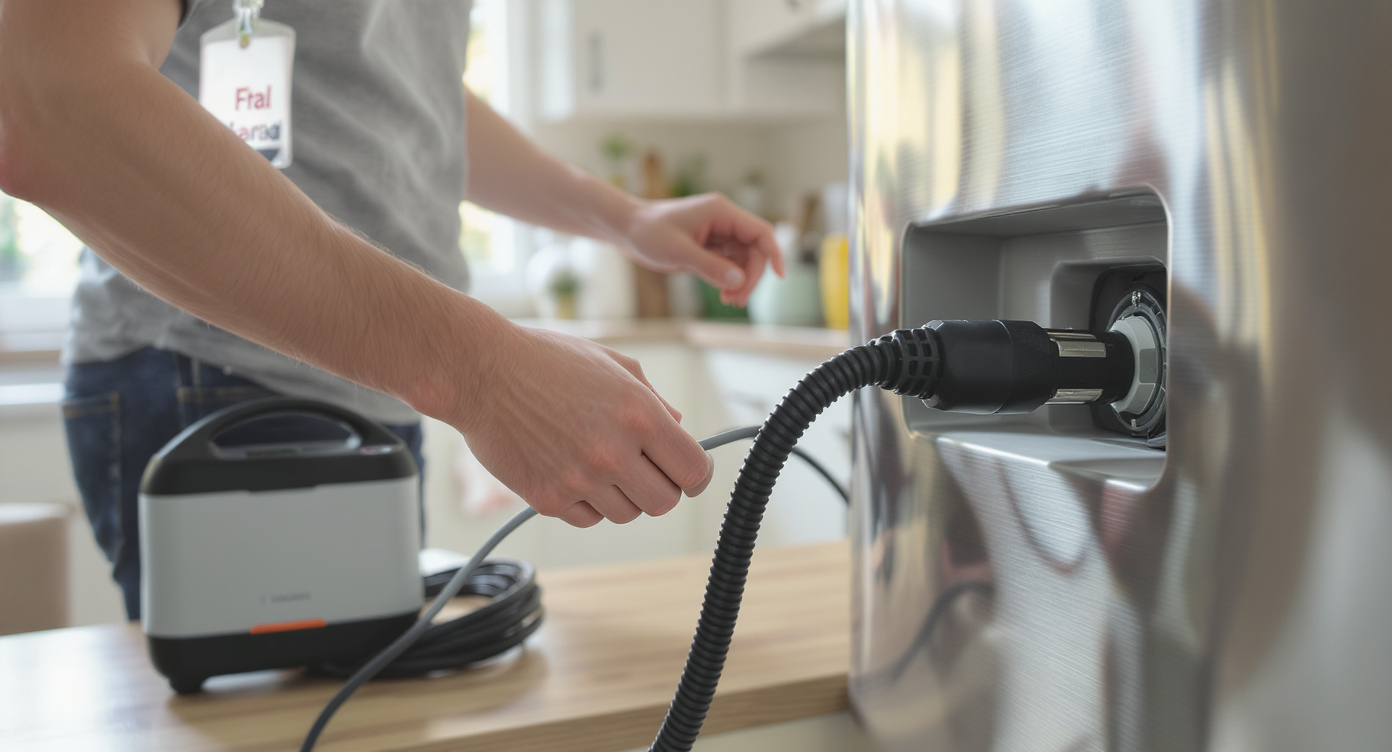
Think of a solar generator’s battery like a fuel tank in a car — except instead of gallons, you’re measuring in watt-hours (Wh), which tells you how much total energy is stored. A 1,000Wh battery can theoretically deliver 1,000 watts for one hour, or 100 watts for ten hours. Your fridge running at an average of 150 watts would drain that battery in roughly six to seven hours — which is fine overnight, but you’ll need solar panels recharging it during the day to sustain it across multiple days.
The other number that matters is continuous output wattage — how many watts the unit can deliver at any given moment through its inverter (a device that converts stored DC battery power into the AC electricity your home outlets use). A generator rated at 2,000W continuous output can run appliances totaling up to 2,000W simultaneously. Exceed that, and the unit will shut off or throttle down to protect itself.
There’s also peak or surge wattage — the brief burst of power some appliances need when starting up (motors in refrigerators and AC units are the classic examples). A unit with 2,000W continuous but 4,000W surge can handle that startup spike without tripping. Always check both numbers when sizing for home use. If you want to go deeper on sizing, our solar generator sizing guide walks through the math step by step.
How Much House Can Different Sizes Actually Cover?
Small Units (Under 500Wh)
These are camping and device-charging tools. They’ll keep your phone, laptop, and a small fan running, but they’re not a home backup solution. Don’t expect them to sustain a refrigerator through the night.
Mid-Range Units (500Wh–2,000Wh)
This is where home backup starts to become genuinely useful. A quality 1,500–2,000Wh unit can run a full-size refrigerator, LED lighting throughout the home, a router, and device charging simultaneously for 8–12 hours depending on your load. Pair it with 200–400W of solar panels and you can extend that indefinitely in good sun conditions.
Large and Expandable Units (2,000Wh–10,000Wh+)
Several manufacturers now offer expandable systems where you can stack additional battery modules, pushing total capacity into the 5,000–10,000Wh range. At that scale, you’re genuinely covering most essential home circuits for 24+ hours and recharging continuously with a robust solar panel array. This is the tier where the answer to “can a solar generator power a house” starts shifting from “mostly” to “yes, for essential loads.” You’ll want to understand how long solar generators last before making that kind of investment.
Solar Input: The Recharging Equation
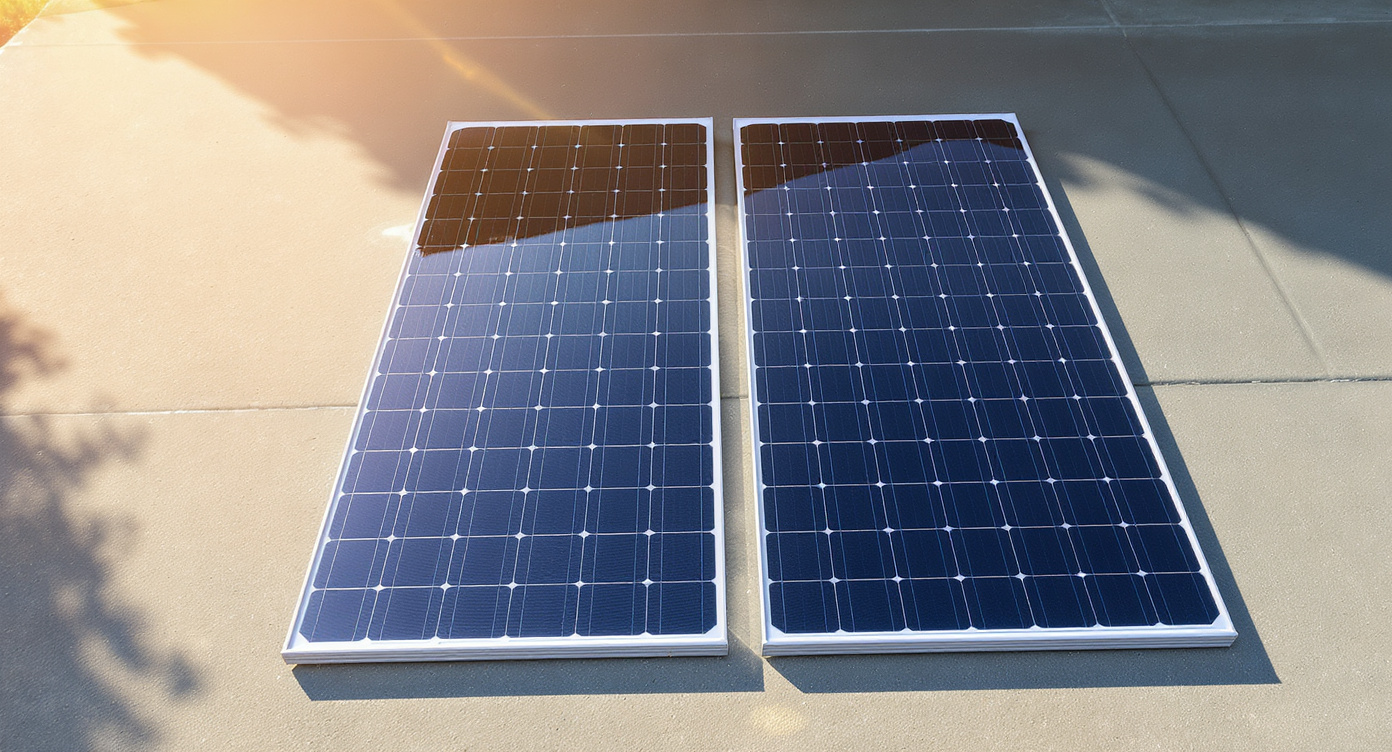
A solar generator without enough solar panels is like a phone with a slow charger — it works, but you’re constantly anxious about the battery level. The recharge rate depends on panel wattage, sunlight hours, and the unit’s maximum solar input rating (measured in watts). A 2,000Wh battery with a 400W solar input can theoretically recharge in about five hours of peak sun — realistic in summer, tighter in winter or cloudy climates.
This is why the panel setup matters as much as the battery. Most solar generators accept between 200W and 800W of solar input; larger expandable systems can go higher. Matching your panel array to your consumption habits is the key to true whole-day coverage. Wondering how the solar side integrates with the generator side? Our overview of connecting a generator to a solar system covers the technical side of that integration.
Here’s something worth considering: do you actually need to run everything at once, or can you manage your loads strategically? Shifting high-draw tasks (like running a window AC unit) to peak solar hours while the panels are actively recharging the battery can dramatically extend your coverage without needing a bigger unit.
Solar Generator vs. Gas Generator for Home Backup
This comparison comes up constantly, and it’s worth being direct about it. Gas generators typically offer higher continuous wattage at a lower upfront cost — a 5,500W gas generator might cost $700–$1,200 and run indefinitely as long as you have fuel. A comparable solar generator setup with enough capacity and panels could cost $2,000–$5,000 or more. So why would you choose solar?
- No fuel storage or supply chain dependency — critical during extended regional emergencies when gas stations are overwhelmed
- Silent operation — you can run it indoors safely, without carbon monoxide risk
- Zero maintenance — no oil changes, carburetors, or spark plugs
- Indefinite runtime with sun — as long as panels are charging, the system keeps going
- Lower long-term cost — no ongoing fuel expense
For a thorough breakdown of the tradeoffs, our solar vs. gas generator comparison goes into much more detail. The short version: for extended outages where fuel availability is uncertain, solar wins on reliability. For short-term, high-wattage needs, gas still has an edge.
Honest Pros & Cons of Using a Solar Generator to Power a House
Pros
- Silent, fume-free operation — safe indoors
- No fuel costs; sun is free and always available
- Low maintenance; lithium batteries last 2,000–3,500+ charge cycles
- Scalable — many systems accept additional battery modules
- Works as a daily home energy supplement, not just emergency backup
- Can integrate with existing solar panel setups
Cons
- High upfront cost for whole-home coverage
- Cannot reliably run high-draw appliances (electric dryer, range, central HVAC)
- Recharge time depends on sunlight — cloudy stretches reduce availability
- Capacity limits mean careful load management is required
- Not a drop-in replacement for grid power without significant investment
Top Solar Generators for Home Backup Power
These picks are tailored for homeowners who want reliable essential-circuit coverage, not just device charging.
EcoFlow DELTA Pro
Brand: EcoFlow
Capacity: 3,600Wh (expandable to 25kWh with extra batteries) | Output: 3,600W AC continuous, 7,200W surge | Solar Input: Up to 1,600W
Why it fits: One of the most capable home-backup solar generators available. The expandable battery system means you can scale up as your needs grow, and the 3,600W output handles refrigerators, window AC units, and multiple devices simultaneously. The built-in smart panel compatibility makes whole-home integration straightforward.
Jackery Explorer 2000 Plus
Brand: Jackery
Capacity: 2,042Wh (expandable to 12kWh) | Output: 3,000W AC continuous, 6,000W surge | Solar Input: Up to 1,000W
Why it fits: A solid mid-to-large option for homeowners who want expandability without the full EcoFlow price tag. The 3,000W output covers most essential home loads, and the modular battery expansion is genuinely useful for multi-day outage coverage.
Bluetti AC200MAX
Brand: Bluetti
Capacity: 2,048Wh (expandable to 8,192Wh) | Output: 2,200W AC continuous, 4,800W surge | Solar Input: Up to 900W
Why it fits: A well-rounded home backup unit with strong expandability and a reputation for reliability. The 900W solar input allows reasonably fast recharging in good conditions, and the 2,200W output comfortably covers a fridge, lights, fans, and device charging simultaneously.
Anker SOLIX F3800
Brand: Anker
Capacity: 3,840Wh (expandable to 26.9kWh) | Output: 6,000W AC continuous, 12,000W surge | Solar Input: Up to 2,400W
Why it fits: The highest-output unit on this list. The 6,000W continuous rating means it can handle loads that most solar generators can’t touch — including some HVAC systems and larger kitchen appliances. For homeowners who want genuine whole-home coverage, this is the tier to consider.
Goal Zero Yeti 3000X
Brand: Goal Zero
Capacity: 2,982Wh | Output: 2,000W AC continuous, 3,500W surge | Solar Input: Up to 600W
Why it fits: A trusted name in solar backup with a large, established ecosystem of compatible panels and accessories. The 3,000Wh capacity is excellent for essential home circuits, and Goal Zero’s build quality is consistently well-regarded for long-term reliability.
Insider Tip: If you’re comparing units, pay close attention to the battery chemistry. LFP (lithium iron phosphate) batteries — used in most modern solar generators — have a longer cycle life and better thermal stability than older lithium-ion chemistries. They’re worth the slight premium for a home backup application where you want the system to last 10+ years. Check our breakdown of solar generator pricing to understand what you’re paying for at each tier.
A Note on Whole-Home Integration
If you want a solar generator to power specific circuits in your home (rather than just plugging appliances directly into it), you’ll need either a transfer switch (a device that safely disconnects your home from the grid and connects it to your generator) or a smart home panel that some manufacturers now offer as accessories. This isn’t a DIY job — it requires a licensed electrician — but it transforms a portable solar generator into a genuine home backup system that automatically covers your critical circuits. The cost of that installation is worth factoring into your total budget.
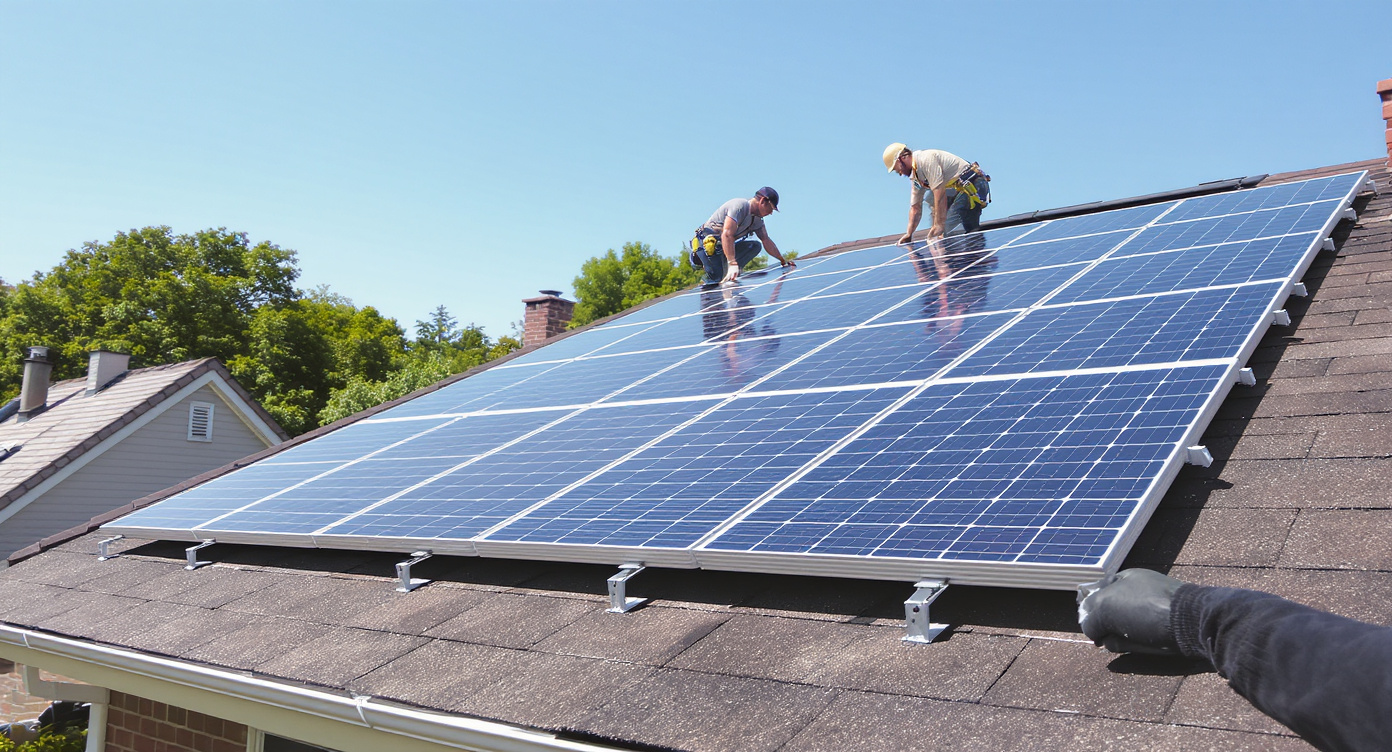
It’s also worth asking: if you already have solar panels, do you still need a generator? The answer might surprise you — rooftop solar panels alone don’t provide backup power during a grid outage unless you have battery storage or a specific grid-forming inverter setup.
Frequently Asked Questions
Can a solar generator completely replace grid power for a house?
For most homes, not with a single portable unit. A fully off-grid setup requires a large battery bank, a substantial solar array, and careful energy management. Portable solar generators are best framed as essential-circuit backup rather than full grid replacement, unless you invest in a high-capacity expandable system and manage your loads carefully.
How many solar panels do I need to keep a solar generator charged at home?
It depends on your unit’s solar input rating and your daily consumption. A rough rule: match your daily watt-hour consumption to your panel output × peak sun hours. In most U.S. regions, 4–6 peak sun hours per day is a reasonable average. A 2,000Wh battery drained daily would need roughly 400–500W of panels to reliably recharge in that window.
Is it safe to run a solar generator indoors?
Yes — unlike gas generators, solar generators produce no exhaust and no carbon monoxide. They can be operated safely indoors, which is a significant practical advantage during home emergencies.
Can I build my own solar generator for home backup instead of buying one?
Absolutely — and it can be more cost-effective at larger capacities. Our guide on building a solar generator covers the components and assembly process in detail.
How does a solar generator compare to a standby home generator?
A standby generator (the permanently installed natural gas or propane units) can power an entire home including HVAC and large appliances. Solar generators can’t match that output at comparable price points — but they’re silent, require no fuel, and need essentially zero maintenance. For essential-circuit coverage, solar generators are increasingly competitive. Our full solar vs. generator comparison lays out the tradeoffs in depth.
The Bottom Line: Is a Solar Generator Right for Your Home?
If your goal is to keep your refrigerator running, your lights on, your devices charged, and your router active during a power outage — yes, a well-sized solar generator can absolutely handle that. If you’re hoping to run your whole house exactly as normal, including central air, electric cooking, and laundry, you’ll either need a very large (and expensive) expandable system or a conventional standby generator.
The most important step is honest load assessment: write down every appliance you truly need during an outage, look up their wattage, and add it up. That number tells you the minimum output and capacity you need. From there, matching a unit to your budget becomes much clearer.
Ready to go further? Explore our guides on the fastest-charging solar generators if recharge speed is a priority, or revisit our sizing guide to nail down the right capacity for your specific home. The right solar generator doesn’t just cover your outages — it gives you a genuinely resilient home energy setup that works harder the longer you own it.