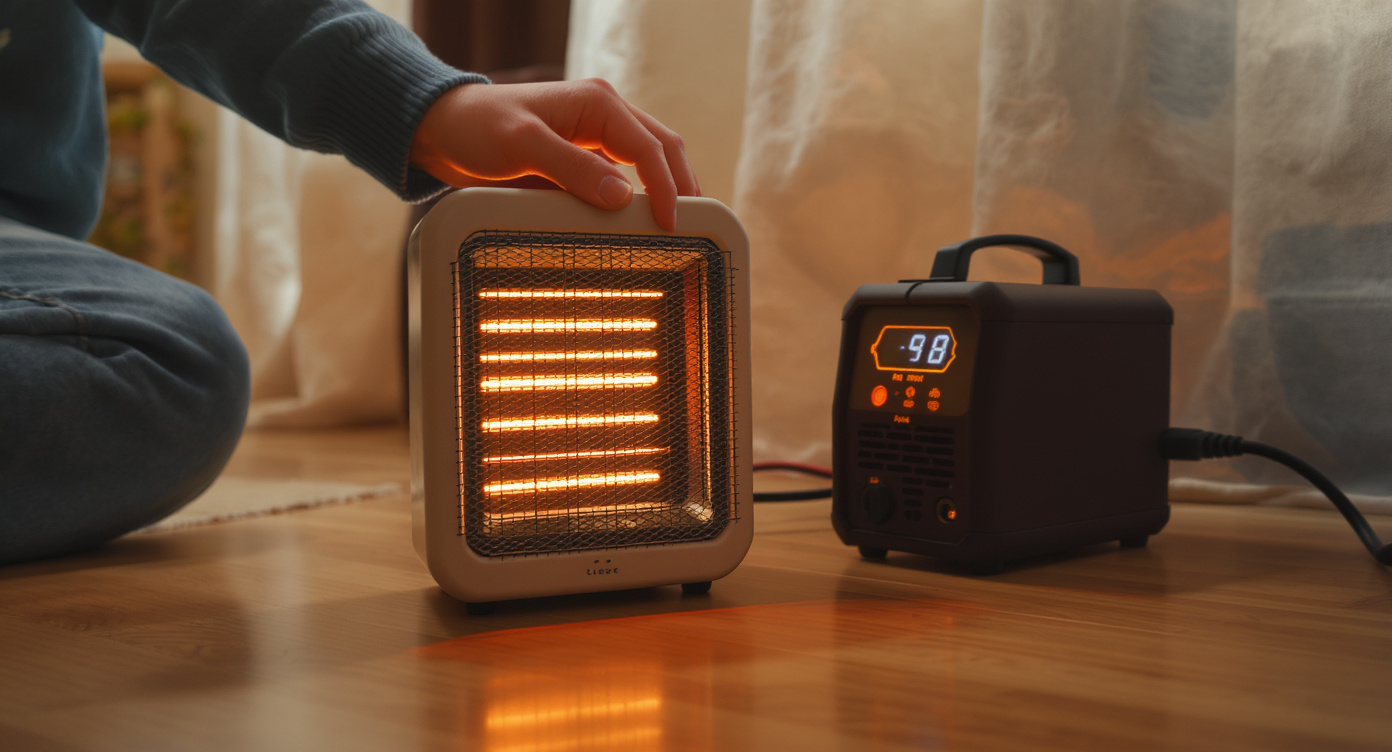
Here’s something that trips up a lot of first-time solar generator owners: you’ve got a shiny new portable power station, a cold room, and a space heater sitting right there — and you’re genuinely unsure whether plugging them together is a great idea or a fast way to drain your battery in twenty minutes. The question can a solar generator power a space heater is one of the most common we hear, and the honest answer is: yes, but with some important caveats that most buyers don’t find out until after the purchase.
Space heaters are among the most power-hungry appliances you’ll ever try to run on a battery system. Understanding exactly why — and how to work around it — is what this article is all about. We’ll walk through the wattage math, realistic runtime expectations, which solar generator sizes actually make sense for heating, and a few smart strategies that can stretch your battery much further than you’d expect.
The Short Answer: Can It Be Done?
Yes, a solar generator can power a space heater — provided the generator’s continuous output wattage meets or exceeds the heater’s draw (typically 750W–1,500W), and its battery capacity (measured in watt-hours, or Wh) is large enough to sustain that load for a meaningful amount of time. A 1,000Wh solar generator running a 1,000W heater will last roughly one hour under ideal conditions. For longer heating sessions, you’ll need a larger battery bank or a lower-wattage heater setting.
Why Space Heaters Are the Toughest Load You’ll Throw at a Solar Generator
Think of your solar generator’s battery capacity like a fuel tank in a car. A small engine sipping at highway speeds will stretch that tank for hours. A big V8 flooring it from a stoplight will drain it in a fraction of the time. Space heaters are that V8. Most standard space heaters run at either 750 watts or 1,500 watts — and they run at that draw continuously, not in short bursts like a refrigerator compressor cycling on and off.
To put that in perspective: a laptop might draw 45–65W. A phone charger pulls maybe 20W. A full-sized LED TV runs around 80–150W. A 1,500W space heater is pulling more power every single hour than most people use on their devices in a day. That’s not a reason to give up on the idea — it’s a reason to go in with accurate expectations and the right equipment.
If you’re still getting familiar with how these systems work, it’s worth reading our overview on what a solar generator is and how it operates before diving deeper into the numbers here.
Running the Numbers: How Long Will It Actually Last?
The formula is straightforward: divide your battery’s usable capacity (in Wh) by your heater’s wattage. A few real-world examples:
- 500Wh battery + 750W heater: roughly 40 minutes of runtime
- 1,000Wh battery + 750W heater: roughly 1.3 hours
- 1,000Wh battery + 1,500W heater: roughly 40 minutes
- 2,000Wh battery + 1,500W heater: roughly 1.3 hours
- 3,600Wh battery + 1,500W heater: roughly 2.4 hours
Notice those numbers aren’t huge. That’s the honest reality of resistive heating (heating that works by passing electricity through a wire to generate heat — the same principle as a toaster). It’s one of the least efficient ways to convert electricity into warmth, which is why heat pumps and propane heaters are often recommended for off-grid situations instead.
Insider tip: Most space heaters have a “low” setting at 750W alongside the standard 1,500W mode. Running on low effectively doubles your runtime. If you’re trying to take the edge off a cold room rather than fully heat a space, the low setting is almost always the smarter choice when you’re running on battery power.
Does Your Solar Generator’s Output Wattage Actually Matter Here?
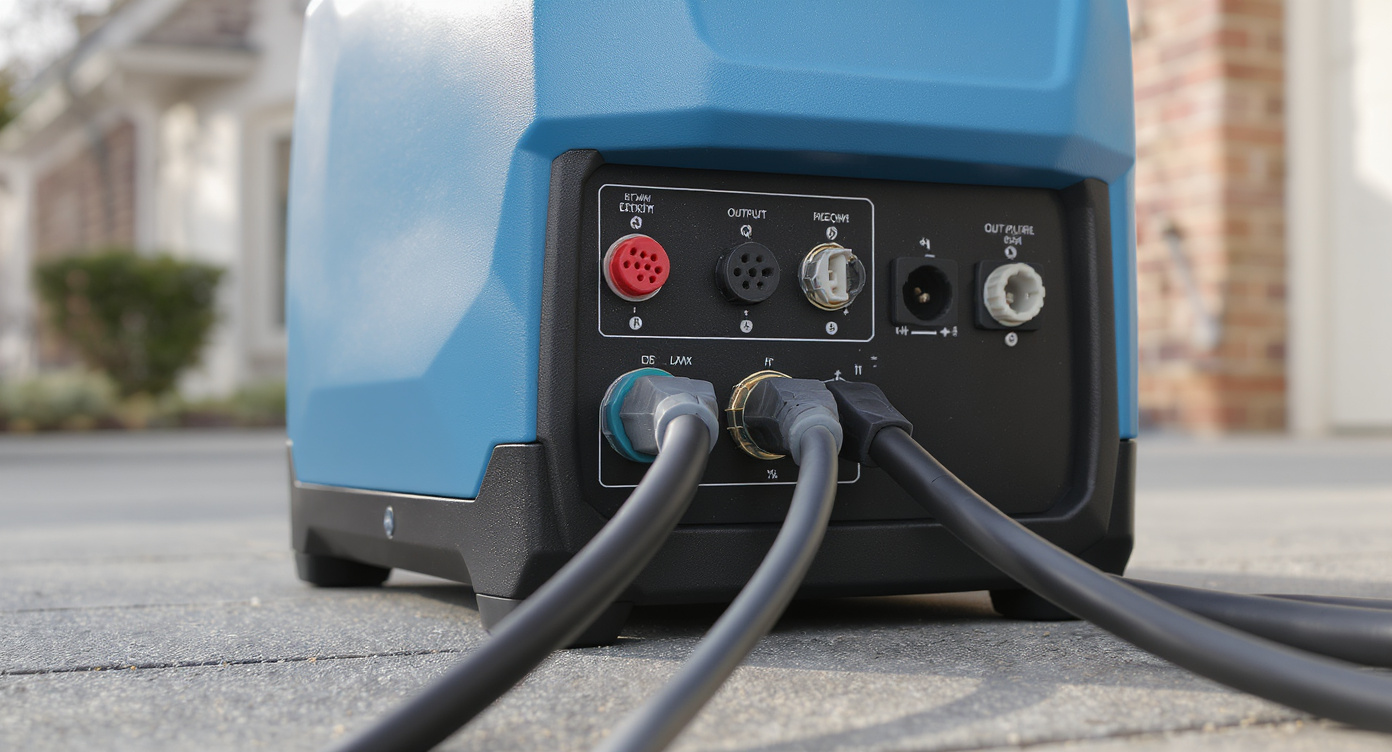
Absolutely — and this is where a lot of buyers get caught off guard. Your solar generator needs to be rated for a continuous output (the sustained wattage it can deliver without tripping a protection circuit) that equals or exceeds your heater’s draw. A unit rated at 1,000W continuous output cannot safely run a 1,500W heater, even if its battery capacity is massive.
Check the spec sheet for two numbers: continuous output watts and peak/surge watts. The continuous number is what matters for space heaters since they don’t have a startup surge like a motor would. If your heater is rated at 1,500W, you need a solar generator with at least 1,500W continuous output — and ideally 1,800W or more to give the system some breathing room.
Wondering what size system makes sense for your overall needs? Our guide on choosing the right solar generator size breaks this down across multiple appliance types.
Recharging While Running: Does Solar Input Help?
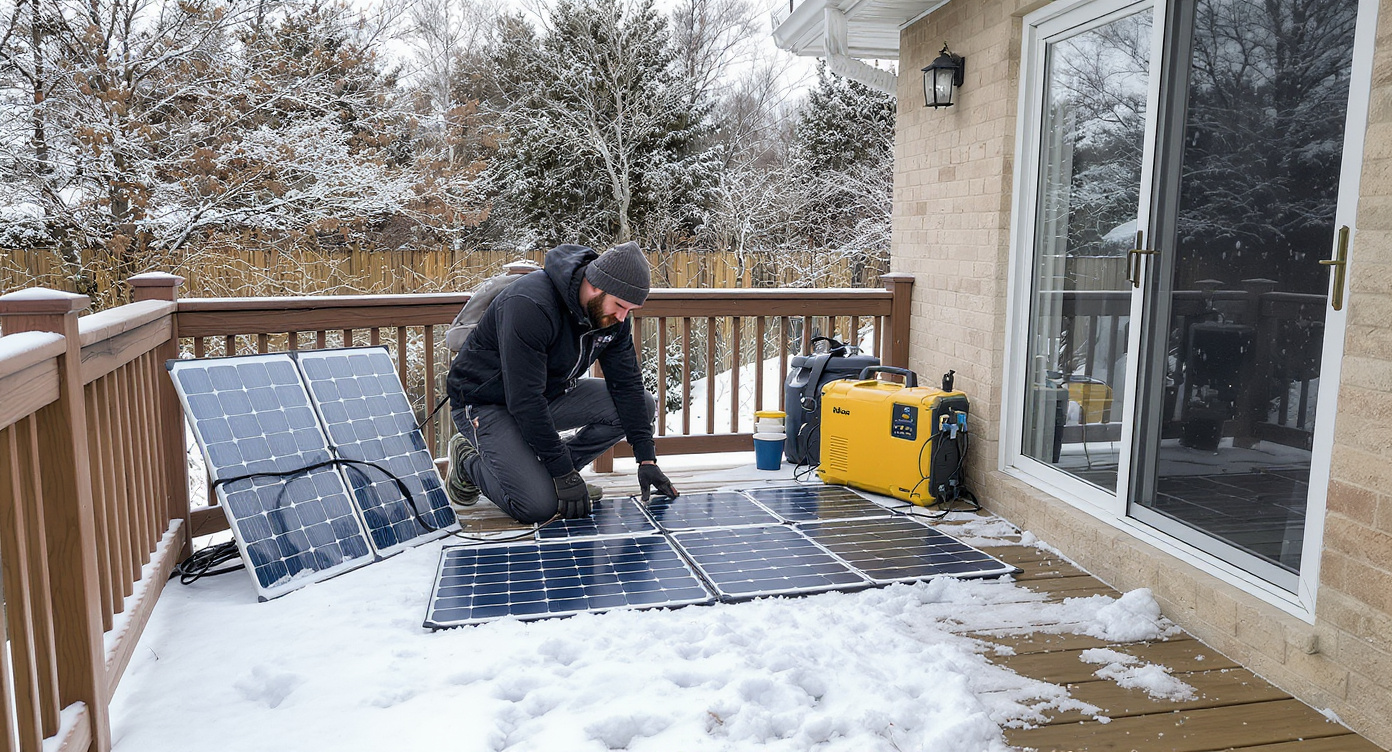
Here’s where things get interesting. If you’re running your space heater during daylight hours and have solar panels connected, your panels can partially offset the draw — extending your effective runtime beyond what the battery alone would provide.
A 200W solar panel in good conditions adds 200W back into the system. Against a 1,500W heater, that offsets about 13% of the load — not transformative, but meaningful over time. With 400–600W of solar input, you’re offsetting closer to a third of the heater’s consumption, which can make a real difference during a long day of mild heating.
The catch: solar input is weather-dependent, angle-dependent, and time-of-day dependent. In winter — when you’re most likely to need a heater — solar output is typically at its lowest due to shorter days, lower sun angles, and cloud cover. Don’t plan your heating strategy around peak solar assumptions in December.
For a closer look at how solar input and battery storage interact, check out our breakdown of connecting a generator to a solar system for hybrid setups.
Smarter Strategies for Heating with a Solar Generator
The raw math on space heaters and solar generators can feel discouraging. But there are several practical approaches that make this genuinely workable:
1. Use a Low-Wattage Personal Heater
Small personal space heaters — the kind designed to warm the space immediately around a desk or chair — often draw only 200–400W. These are dramatically more compatible with solar generator runtimes. If you’re heating a person rather than a room, this is the most efficient path.
2. Pre-Heat Before Battery-Only Mode
If you have grid access during the day, heat your space conventionally and use your solar generator to maintain temperature with shorter heater bursts, rather than bringing a cold room up to temperature on battery power alone. Thermal mass (the ability of furniture, walls, and floors to hold heat) does a lot of the work once a room is warm.
3. Pair with a Larger Battery Bank
Many modern portable power stations support battery expansion modules — additional battery packs that connect directly to the main unit and multiply its total capacity. If you know heating is a priority use case, buying a system that supports expansion is a smart long-term move.
4. Consider a Propane or Catalytic Heater as Primary Heat
For off-grid or emergency situations, a propane heater is far more energy-dense per dollar than resistive electric heating. Use your solar generator for lighting, devices, and smaller loads, and let propane handle the heavy lifting on heat. This is the approach most experienced off-grid users take.
Curious how solar generators stack up against conventional options for whole-home needs? Our comparison of whether a solar generator can power a house covers the bigger picture.
Solar Generators Worth Considering for Heating Use
Not every portable power station is built to handle high-wattage continuous loads. Here are five that have the output and capacity specs to make space heater use realistic:
EcoFlow DELTA Pro
Brand: EcoFlow
Capacity: 3,600Wh (expandable to 25kWh) | Output: 3,600W continuous (X-Boost up to 4,500W)
Why it fits: One of the few portable power stations with enough continuous output and raw capacity to run a 1,500W heater for over two hours on a single charge. The expandable battery ecosystem makes it a long-term investment for heating-heavy use cases.
Jackery Explorer 2000 Pro
Brand: Jackery
Capacity: 2,160Wh | Output: 2,200W continuous
Why it fits: Solid mid-range capacity with enough continuous output to comfortably run a 1,500W heater. The fast solar recharge capability (up to 1,400W solar input) means you can meaningfully replenish between heating sessions on sunny days.
Bluetti AC200MAX
Brand: Bluetti
Capacity: 2,048Wh (expandable) | Output: 2,200W continuous
Why it fits: The AC200MAX handles high-wattage loads reliably and supports B230/B300 expansion batteries, making it a scalable choice if your heating needs grow. Its dual charging inputs allow simultaneous solar and AC charging for faster recovery.
Anker SOLIX F2000
Brand: Anker
Capacity: 2,048Wh | Output: 2,400W continuous
Why it fits: Higher continuous output rating gives you headroom above the 1,500W heater draw, which reduces thermal stress on the inverter (the component that converts stored DC battery power into the AC power your heater needs) during long sessions.
Goal Zero Yeti 3000X
Brand: Goal Zero
Capacity: 2,982Wh | Output: 2,000W continuous
Why it fits: Near-3,000Wh capacity in a well-built, reliable chassis. Running a 750W heater on low, you’re looking at close to four hours of runtime — genuinely useful for overnight or extended heating sessions in a small space.
Honest Pros and Cons of Running a Space Heater on Solar Power
- Pro: Completely silent operation — no fumes, no combustion, no ventilation requirements
- Pro: Works indoors safely, unlike propane or gas options
- Pro: Renewable recharge via solar panels reduces long-term fuel cost
- Pro: Portable — move both the heater and the power station wherever needed
- Con: Runtime is genuinely short without a large battery bank (2,000Wh+)
- Con: High-capacity solar generators capable of this use case are expensive ($1,500–$4,000+)
- Con: Winter solar recharge is slower precisely when heating demand is highest
- Con: Resistive heating is energy-inefficient compared to heat pump alternatives
For context on what you’d be spending, our overview of solar generator pricing across different capacity tiers is a useful reference before you buy.
Frequently Asked Questions
Can a 1,000Wh solar generator run a space heater overnight?
Not realistically. At 1,500W, a 1,000Wh battery lasts under an hour. Even at the 750W low setting, you’re looking at roughly 1.3 hours. Overnight heating on battery alone requires a system in the 3,000–5,000Wh range at minimum, or a combination of battery plus active solar recharging.
Will running a space heater damage my solar generator?
As long as the heater’s wattage stays within the generator’s continuous output rating, no — it won’t cause damage. Running a load that exceeds the continuous output rating can trip protection circuits or, in poorly built units, stress the inverter over time. Always check the spec sheet and stay within rated limits.
Are infrared heaters more efficient than standard space heaters for solar use?
Infrared heaters (which warm objects and people directly rather than heating air) are often available in lower wattages (250W–750W) and can feel warmer at lower power draws because they don’t heat air that escapes through drafts. For solar generator use, a 400W infrared panel heater is a much more compatible choice than a 1,500W convection heater.
Can I run a space heater and other devices at the same time?
Yes, if your total combined wattage stays under the continuous output rating. But be careful — a 1,500W heater plus a 300W laptop charger plus a 150W TV is 1,950W total. You’d need a solar generator rated for at least 2,000W continuous output to handle that safely.
How does this compare to running an air conditioner on solar?
Very similar challenge — both are high-wattage continuous loads. If you’ve looked into running an air conditioner on a solar generator, you’ll find the same basic principles apply: output wattage must be sufficient, and battery capacity determines runtime.
What’s the longest-lasting solar generator for high-wattage use?
Battery longevity depends on cycle count (the number of charge/discharge cycles before capacity degrades) as much as raw capacity. LFP (lithium iron phosphate) batteries typically offer 3,000–3,500 cycles versus 500–1,000 for older NMC (nickel manganese cobalt) chemistry. For heavy use like space heater loads, LFP chemistry is worth prioritizing. Our article on how long solar generators last covers this in more depth.
Wrapping Up: Is a Solar Generator Right for Your Heating Needs?
The bottom line is this: a solar generator can power a space heater, but it’s not a casual pairing. You need a unit with sufficient continuous output (1,500W minimum for a standard heater), meaningful battery capacity (2,000Wh+ for anything beyond a short session), and realistic expectations about winter solar recharge rates. Going in with that clarity makes all the difference between a setup that works and one that frustrates.
If heating is your primary use case, the smartest path is often a larger solar generator paired with a low-wattage personal or infrared heater, rather than trying to muscle a full 1,500W convection heater through a modest battery. And if you’re building a broader off-grid or backup energy system, it’s worth understanding how all the pieces fit together — from building a solar generator setup from scratch to understanding the tradeoffs between solar and gas generators for cold-weather reliability.
Ready to find the right system for your situation? Browse the full range of portable power stations and solar generators at Solarasphere — and if you’re not sure where to start, our guide on sizing your solar generator correctly is the best first step.