Your refrigerator is probably the one appliance you absolutely cannot afford to lose power to — spoiled food, wasted groceries, and a very unhappy household. If you’ve been looking into solar backup power, you’ve likely already asked yourself: can a solar generator actually keep a fridge running? The answer is yes — but only if you match the right capacity and output to your specific refrigerator’s power demands. Finding the best solar generator for refrigerator backup isn’t about buying the biggest unit on the shelf; it’s about understanding a few key numbers and choosing a setup that fits your real-world usage.
This guide walks you through exactly how to size a solar generator for your fridge, what specs actually matter, and which products are worth your money. Whether you’re setting up home backup power, planning for extended outages, or building an off-grid kitchen setup, the information here gives you a clear path forward.
What Does a Refrigerator Actually Need From a Solar Generator?
Before you pick a product, you need to understand what your fridge is asking for electrically. Most standard household refrigerators draw somewhere between 100 and 400 watts while the compressor is running — but here’s the part most buyers miss: the startup surge. When a compressor kicks on, it can briefly demand 3 to 5 times its running wattage for a fraction of a second. A fridge that runs at 150 watts might surge to 600–700 watts at startup. If your solar generator’s inverter (the component that converts stored DC battery power into the AC power your fridge uses) can’t handle that spike, the unit will either shut off or fail to start the fridge at all.
So you’re really looking at two numbers: running watts (continuous output) and peak/surge watts (momentary maximum). A solar generator rated at 500W continuous with 1000W peak surge capacity will handle most mid-size refrigerators comfortably. A unit rated at 300W continuous is a much riskier choice for the same fridge, even if the math on running watts seems fine.
The second number that matters is capacity in watt-hours (Wh) — think of this like the fuel tank. A fridge running at an average of 150 watts for 24 hours consumes roughly 1,500–2,000 Wh per day (accounting for compressor cycles). A solar generator with 1,000 Wh of storage will run that fridge for somewhere between 8 and 12 hours before needing a recharge. For overnight backup, that’s often enough. For multi-day outages, you’ll want 2,000 Wh or more — or a robust solar panel array that can replenish the battery during daylight hours.
The Quick-Answer Sizing Chart
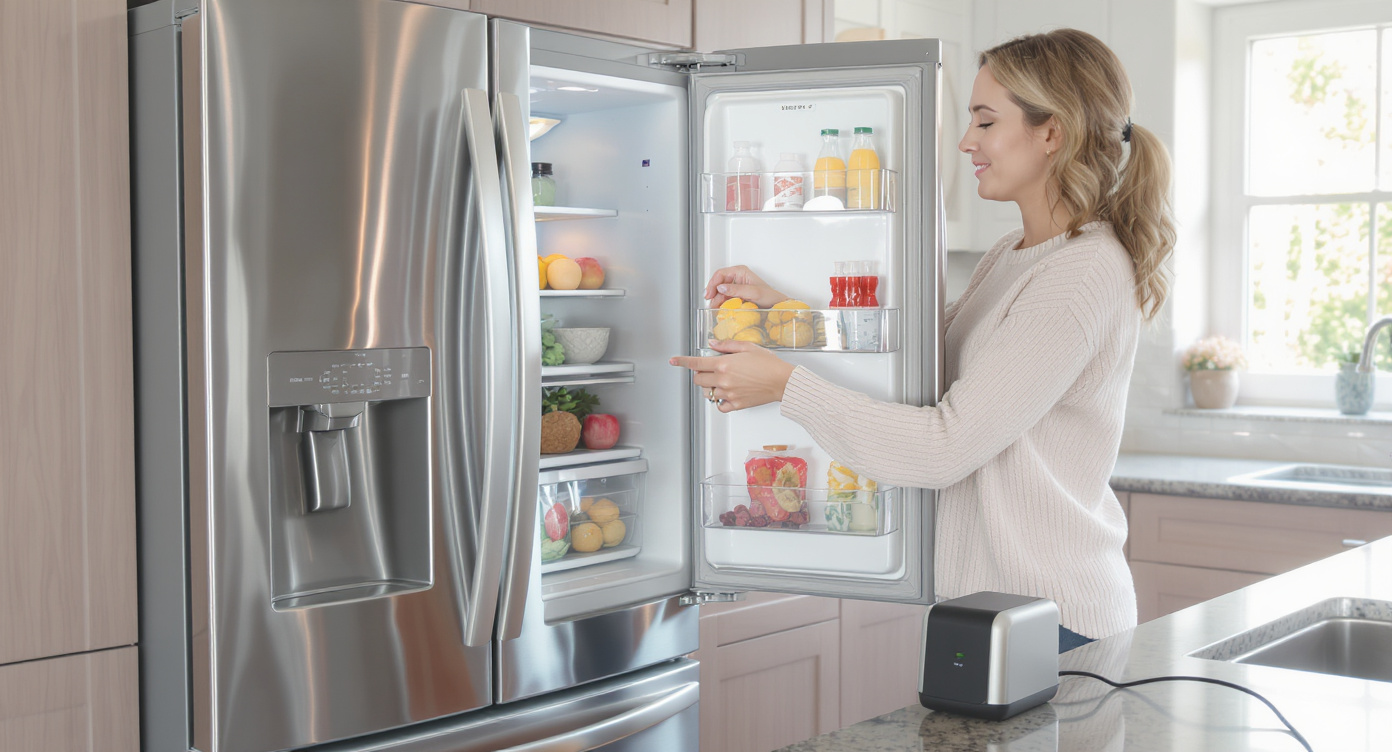
Here’s a snapshot to help you match your fridge size to the right solar generator capacity:
- Mini fridge / compact (1.7–4 cu ft): 500–700 Wh capacity, 300W+ continuous output
- Standard fridge (14–20 cu ft): 1,000–1,500 Wh capacity, 600W+ continuous, 1,200W+ peak
- Large fridge or fridge + freezer combo (20–30 cu ft): 2,000+ Wh capacity, 1,000W+ continuous, 2,000W+ peak
- Full-size side-by-side or French door (30+ cu ft): 3,000+ Wh capacity, 1,500W+ continuous — consider a high-capacity 3000 watt solar generator for this tier
Which Specs Should You Prioritize?
Solar generator spec sheets can feel overwhelming. Here’s what actually moves the needle for refrigerator use specifically:
Battery Chemistry: LFP vs. NMC
Most quality solar generators today use either lithium iron phosphate (LFP) or nickel manganese cobalt (NMC) lithium cells. LFP batteries tend to have longer cycle lives (often 2,000–3,500 full charge/discharge cycles versus 500–1,000 for NMC), handle heat better, and are considered safer for indoor or semi-enclosed use. If you’re planning to run your fridge during extended outages — meaning you’ll cycle the battery frequently — LFP is the smarter long-term investment even if it costs a bit more upfront.
Inverter Type: Pure Sine Wave Is Non-Negotiable
A pure sine wave inverter produces smooth, clean AC power that mirrors what comes out of your wall outlet. A modified sine wave inverter produces a choppy approximation that can cause compressor motors to run hotter, less efficiently, and with a shorter lifespan. For any appliance with a compressor — fridges, freezers, AC units — always choose a solar generator with a pure sine wave inverter. This is one of those specs where cutting corners genuinely costs you later.
Solar Input and Recharge Speed
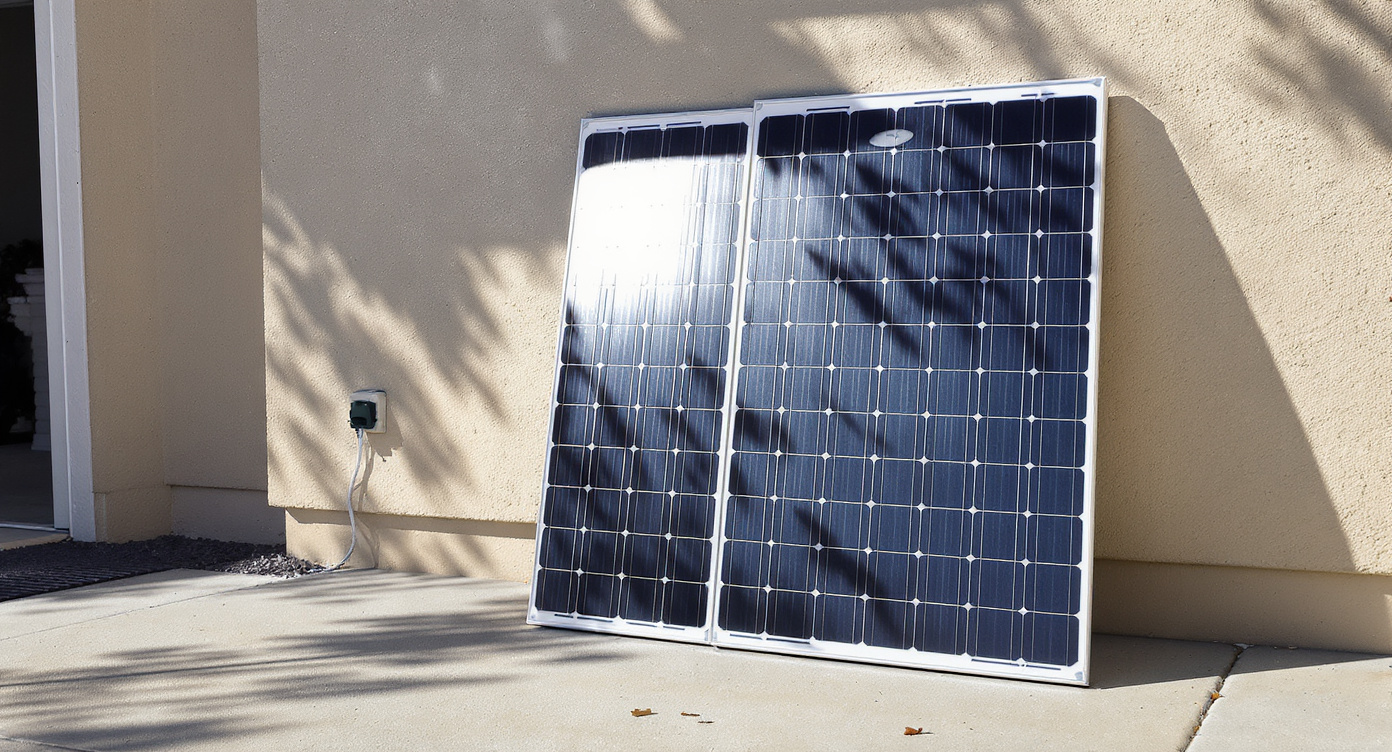
If you’re relying on solar panels to replenish the battery during an outage, pay close attention to the maximum solar input wattage the generator accepts. A 2,000 Wh unit that only accepts 200W of solar input will take 10+ hours of direct sun to fully recharge — which may not keep pace with your fridge’s daily consumption. Look for units accepting 400W–800W of solar input for a workable balance between storage and daily recharge. This is especially critical for anyone building a serious off-grid or extended-backup setup.
Insider tip: Many solar generators allow you to combine solar input with AC wall charging simultaneously (called “pass-through charging”). During a partial outage or planned maintenance window, running both sources at once dramatically cuts recharge time.
Top Solar Generator Picks for Refrigerator Backup
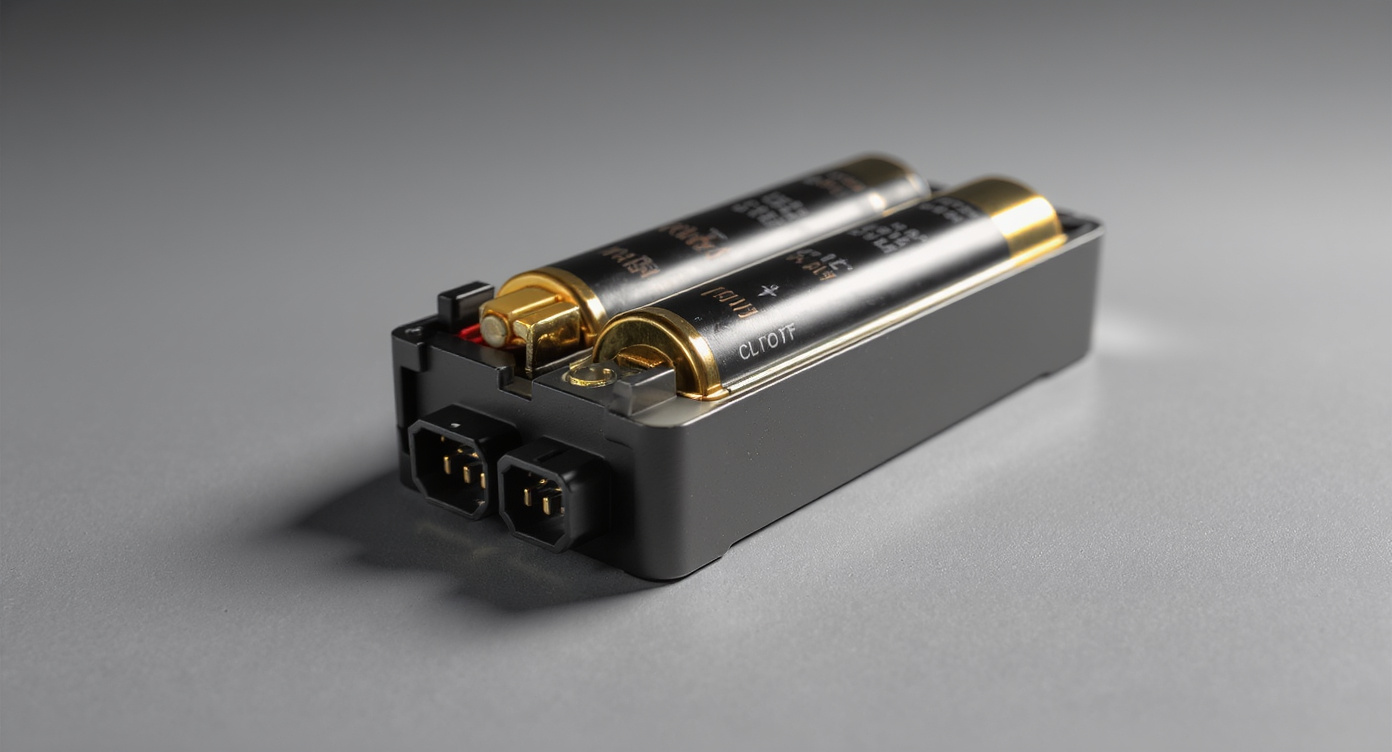
The products below are selected specifically for their ability to handle refrigerator loads — adequate surge capacity, pure sine wave output, and enough storage for meaningful backup time.
EcoFlow Delta 2
Brand: EcoFlow
- Capacity: 1,024 Wh (expandable to 2,048 Wh with add-on battery)
- Output: 1,800W continuous / 2,700W surge
- Solar input: up to 500W
- Battery: LFP, rated ~3,000 cycles
- Inverter: Pure sine wave
Why it fits: The 2,700W surge capacity handles virtually any standard household fridge’s compressor startup. The expandable capacity means you can grow your backup storage as your needs evolve, and the 500W solar input keeps recharge times reasonable.
Jackery Explorer 2000 Pro
Brand: Jackery
- Capacity: 2,160 Wh
- Output: 2,200W continuous / 4,400W surge
- Solar input: up to 1,400W (with multiple panels)
- Battery: NMC lithium
- Inverter: Pure sine wave
Why it fits: The 4,400W surge rating is overkill for most fridges — and that’s the point. You’ll never stress this unit with a compressor startup. The 2,160 Wh capacity gives you roughly 24–36 hours of fridge-only runtime depending on your model’s efficiency.
Bluetti AC200MAX
Brand: Bluetti
- Capacity: 2,048 Wh (expandable up to 8,192 Wh with B230/B300 batteries)
- Output: 2,200W continuous / 4,800W surge
- Solar input: up to 900W
- Battery: LFP, rated ~3,500 cycles
- Inverter: Pure sine wave
Why it fits: For households running a large fridge plus a freezer, the expandable capacity and high surge rating make this a serious contender. The 900W solar input also means faster daytime recharging than many competitors at this price point.
Anker SOLIX C1000
Brand: Anker
- Capacity: 1,056 Wh (expandable)
- Output: 1,800W continuous / 2,400W surge
- Solar input: up to 600W
- Battery: LFP
- Inverter: Pure sine wave
Why it fits: A strong mid-range option for standard fridges (14–22 cu ft). The LFP chemistry and competitive recharge speed make it a reliable everyday backup without the premium price of larger units.
How Does This Compare to Other Solar Generator Use Cases?
It’s worth noting that refrigerator backup places different demands on a solar generator than many other common uses. Running a CPAP machine overnight, for example, draws a fraction of what a compressor-based appliance demands — if you’re curious about that application, the best solar generator for CPAP use involves very different capacity requirements. Similarly, RV setups often prioritize portability and charging flexibility over raw surge capacity; you can explore those tradeoffs in our guide to the best solar generator for RV use.
If you’re building a more comprehensive home backup system — one that covers your fridge, lights, and other essentials simultaneously — it’s worth reading through our overview of the best solar generators across all categories, or if you need whole-home coverage, the best whole house solar generator guide covers the larger-scale options in detail.
Common Setup Mistakes That Affect Refrigerator Performance
Even with the right solar generator, a few setup errors can cause problems. The most common one: running the fridge on a long, undersized extension cord. Voltage drop across a thin or overly long extension cord can cause the compressor to receive lower voltage than it needs, leading to overheating and premature failure. If you need an extension, use a heavy-gauge (12 AWG or thicker) cord rated for the appliance’s amperage, and keep it as short as practical.
Another mistake is not accounting for ambient temperature. Solar generators lose some capacity in extreme cold (below about 32°F / 0°C), and battery performance can drop noticeably in freezing conditions. If you’re storing your unit in an unheated garage during winter, factor in a 10–20% capacity reduction when calculating whether it’ll last through the night.
Insider tip: Run your fridge at its coldest setting a day before an anticipated outage (if you have advance warning). A thoroughly pre-chilled fridge maintains safe temperatures longer between compressor cycles, effectively reducing the power draw on your solar generator during the critical backup period.
Pros and Cons of Using a Solar Generator for Refrigerator Backup
- ✅ Silent operation — no exhaust fumes, no noise; safe to use indoors
- ✅ No fuel storage required — recharges from solar panels, wall outlets, or car ports
- ✅ Scalable — many units accept expansion batteries for increased runtime
- ❌ Higher upfront cost compared to a gas generator of similar output
- ❌ Limited runtime without solar recharging — a 1,500 Wh unit won’t last more than 12–18 hours on a full-size fridge
- ❌ Recharge time depends on sunlight — cloudy multi-day outages can limit solar replenishment
- ❌ Heavy units — 2,000+ Wh generators often weigh 40–70 lbs, limiting portability
✅ Low maintenance — no oil changes, spark plugs, or carburetors
Frequently Asked Questions
Can I run a refrigerator and freezer simultaneously on one solar generator?
Yes, but you’ll need a unit with enough continuous output to cover both running loads simultaneously, plus enough surge capacity for the scenario where both compressors happen to start at the same time. Add the running wattages of both appliances and multiply by roughly 3–4x to estimate the worst-case surge demand. A 3,000W continuous / 6,000W surge unit handles most fridge-plus-freezer combinations comfortably. Our guide to the best 3000 watt solar generator options covers exactly this tier.
How many solar panels do I need to keep a fridge running indefinitely?
For a standard 150W average-draw refrigerator running 24 hours, you need to replace roughly 1,500–2,000 Wh per day. In a location receiving 5 peak sun hours daily, you’d need approximately 300–400W of solar panel capacity to break even — meaning the battery stays charged rather than depleting day over day. In cloudier climates or during winter, bump that estimate up by 30–50%.
Will a solar generator damage my refrigerator’s compressor?
Not if it uses a pure sine wave inverter, which all quality solar generators do. Modified sine wave units can stress compressor motors over time, but those are increasingly rare in the current market. Always verify the inverter type in the product specs before purchasing.
What’s the difference between a solar generator and a gas generator for fridge backup?
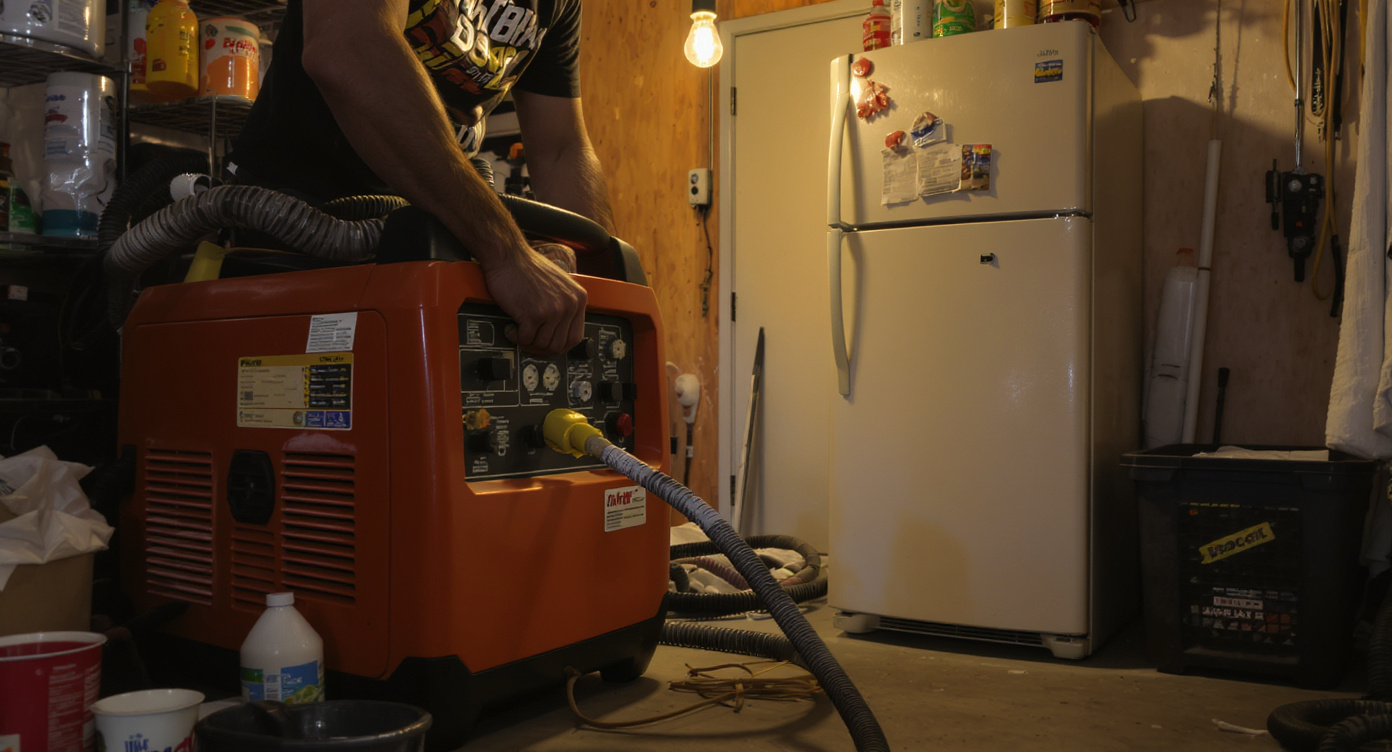
A gas generator typically offers higher continuous output and lower cost per watt-hour of runtime, but requires fuel storage, produces exhaust (outdoor use only), and needs regular maintenance. A solar generator is quieter, cleaner, and can self-replenish with panels — but has a higher upfront cost and is constrained by battery capacity. For short outages (under 24 hours), a well-sized solar generator is often the more convenient choice. For multi-day outages without reliable sun, a gas generator or a hybrid approach may be more practical.
Can I leave a solar generator connected to my fridge full-time as a UPS (uninterruptible power supply)?
Some solar generators support “UPS mode” or pass-through charging, where the unit stays plugged into the wall and seamlessly switches to battery power the moment grid power drops — with no interruption to the fridge. Not all models support this, so check the spec sheet specifically for UPS mode or pass-through capability if this is important to your setup.
Conclusion: Match the Generator to the Fridge, Not the Other Way Around
The best solar generator for refrigerator backup is the one sized correctly for your specific appliance — not the most expensive unit, and not the most portable one. Start with your fridge’s running wattage and surge demand, calculate how many hours of backup you realistically need, and then match those numbers to a generator with adequate capacity, a pure sine wave inverter, and enough solar input to recharge at a useful rate.
For most standard household fridges, a 1,500–2,000 Wh unit with 1,800W+ continuous output and a 3,000W+ surge rating hits the sweet spot between cost, runtime, and reliability. If you’re scaling up to cover more appliances or need a broader overview of your options, our complete solar generator guide is a great next step. Pick the right numbers, verify the inverter type, and you’ll have a setup that keeps your food safe when the grid can’t.