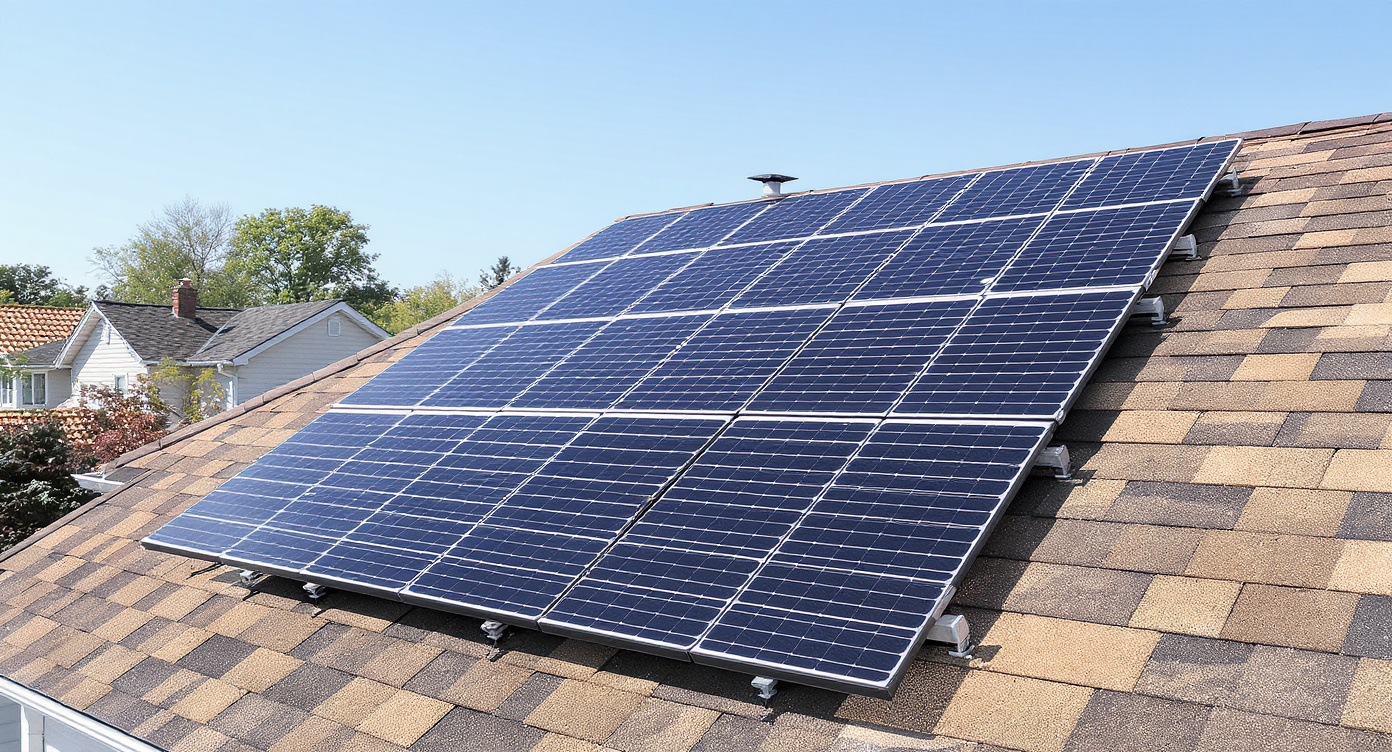
Here’s something that catches a lot of buyers off guard: a “2400Wh” rating doesn’t tell you nearly as much as you think it does — not until you understand how the inverter (the component that converts stored DC battery power into usable AC power for your devices) is sized, what battery chemistry is inside, and how the unit handles simultaneous loads. If you’ve been digging into Bluetti 2400Wh solar generator reviews and walking away more confused than when you started, this guide is for you.
Bluetti has built a strong reputation in the portable power station space, and their 2400Wh-class units represent a serious step up from the compact weekend-camping crowd. These are machines designed for real, sustained power needs — home backup, off-grid cabins, extended RV trips, and job sites where grid access is spotty or nonexistent. But “serious” also means a serious price tag, so let’s make sure you know exactly what you’re paying for before you commit.
What Does 2400Wh Actually Mean in Practice?
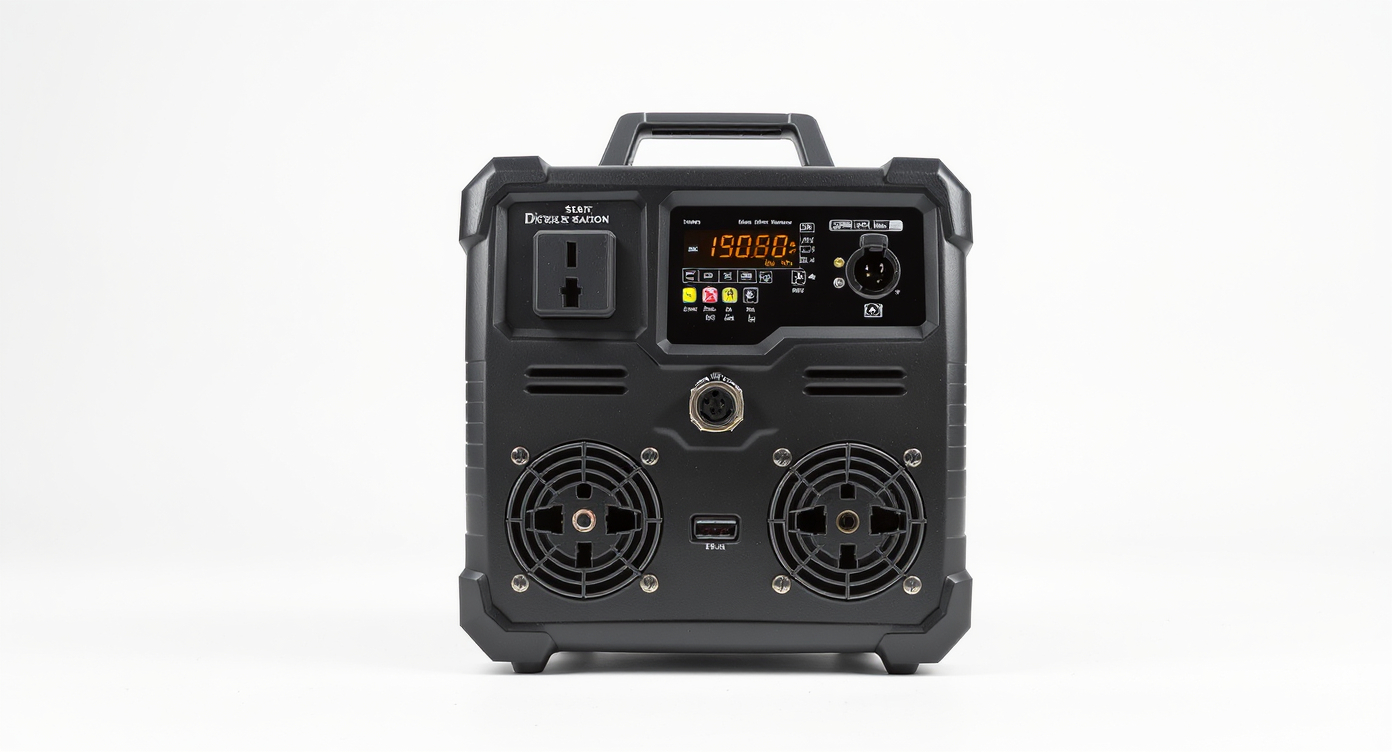
Think of watt-hours (Wh) like a fuel gauge on a car: it tells you how much energy is stored, but your mileage depends entirely on what you’re running. A 2400Wh capacity means the generator holds enough energy to theoretically deliver 2,400 watts for one hour, or 240 watts for ten hours. In real-world terms, that’s roughly enough to run a full-size refrigerator for 24–36 hours, keep a CPAP machine going for several nights, power a 65-inch TV for 20+ hours, or run a portable AC unit for 4–6 hours depending on the model and settings.
The key phrase there is “theoretically.” Real-world usable capacity is typically 80–90% of the rated figure once you account for inverter efficiency losses and temperature effects on the battery. Bluetti is generally transparent about this, which is one reason their units tend to score well when reviewers do hands-on discharge testing. Still worth keeping in mind when you’re planning your load calculations.
Quick Answer: Bluetti’s 2400Wh solar generators use LiFePO4 (lithium iron phosphate) battery chemistry, offer AC output typically ranging from 2,000W to 3,000W continuous, and support solar input up to 1,200W or more depending on the model. They’re best suited for home backup, off-grid use, and extended trips where you need multi-day power without a fuel source.
Which Bluetti Models Fall in the 2400Wh Class?
Bluetti has released several units in or near the 2,400Wh range, and the naming can get confusing quickly. Here’s a breakdown of the most commonly reviewed models in this capacity tier:
- Bluetti AC200MAX: 2,048Wh capacity with a 2,200W AC inverter. Expandable via B230 or B300 battery modules, which is a huge differentiator. Supports up to 900W solar input natively.
- Bluetti AC200P: The predecessor — also 2,000Wh with a 2,000W inverter. Solid build, no expansion capability, still widely available and well-reviewed for its price point.
- Bluetti AC240: A newer entry with 2,048Wh, a 2,400W inverter, and improved solar input (up to 1,200W). Designed with semi-solid-state battery improvements and enhanced thermal management.
- Bluetti AC300 + B300: Technically a modular system — the AC300 itself has no built-in battery, but paired with one B300 module (3,072Wh) it exceeds the 2,400Wh range. Often appears in 2400Wh comparison searches because buyers are looking at this tier.
For the purposes of this review guide, we’ll focus primarily on the AC200MAX and AC240, as these are the units most commonly meant when buyers search for Bluetti 2400Wh solar generator reviews. If you’re also weighing options from other brands, it’s worth checking out comprehensive Bluetti solar generator reviews covering the full lineup, or comparing against the best LiFePO4 solar generators on the market right now.
Bluetti AC200MAX: What Real Users Are Saying
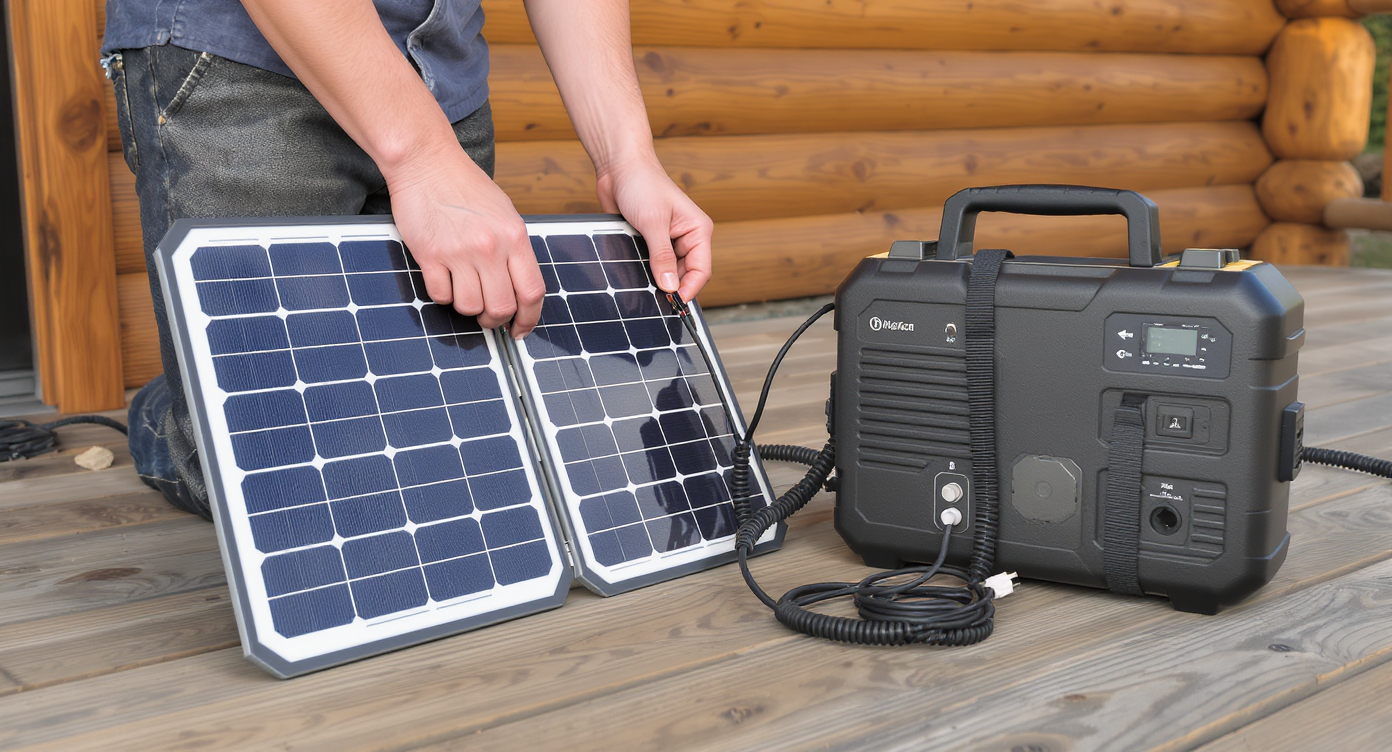
The AC200MAX is probably the most reviewed Bluetti unit in this capacity class, and the consensus is remarkably consistent across independent testers and long-term owners. The expandability is the feature that gets the most praise — being able to add a B230 (2,048Wh) or B300 (3,072Wh) external battery module without buying a whole new unit is genuinely useful. You’re essentially future-proofing your investment.
On the performance side, reviewers consistently note that the AC200MAX handles high-draw appliances without the voltage sag or inverter shutdowns that plague cheaper units. The 2,200W continuous output with a 4,800W surge capacity (surge meaning the brief spike of power needed to start motors in appliances like refrigerators and air conditioners) gives it enough headroom for most household loads short of electric stoves and central HVAC. The dual 30A RV outlets are a nice touch that many competing units skip entirely.
Criticisms? The unit is heavy — expect to move it with two people or a hand truck. The 900W solar input ceiling, while adequate, feels a little constrained compared to newer competitors. And the app connectivity, while functional, has received mixed reviews for reliability over Bluetooth. These are real tradeoffs worth knowing upfront.
Bluetti AC240: The Newer Contender Worth Knowing About
The AC240 addresses several of the AC200MAX’s limitations directly. The solar input jumps to 1,200W, meaning you can get a full recharge from panels in roughly 2–2.5 hours under ideal conditions — a meaningful improvement if you’re relying on solar as your primary charging source. The inverter steps up to 2,400W continuous, and Bluetti has incorporated what they describe as enhanced thermal management to reduce heat buildup during sustained high-load operation.
Is the AC240 worth the premium over the AC200MAX? That depends on your use case. If solar charging speed matters to you — say, you’re off-grid and don’t have grid access as a backup — the faster recharge rate is a genuine advantage. If you’re primarily using this as home backup with occasional solar top-offs, the AC200MAX’s lower price and expandability might make more sense. Worth comparing both against alternatives like Titan solar generator reviews and the Goal Zero Yeti 1250 to see where Bluetti sits competitively.
Solar Charging Performance: What the Numbers Don’t Tell You
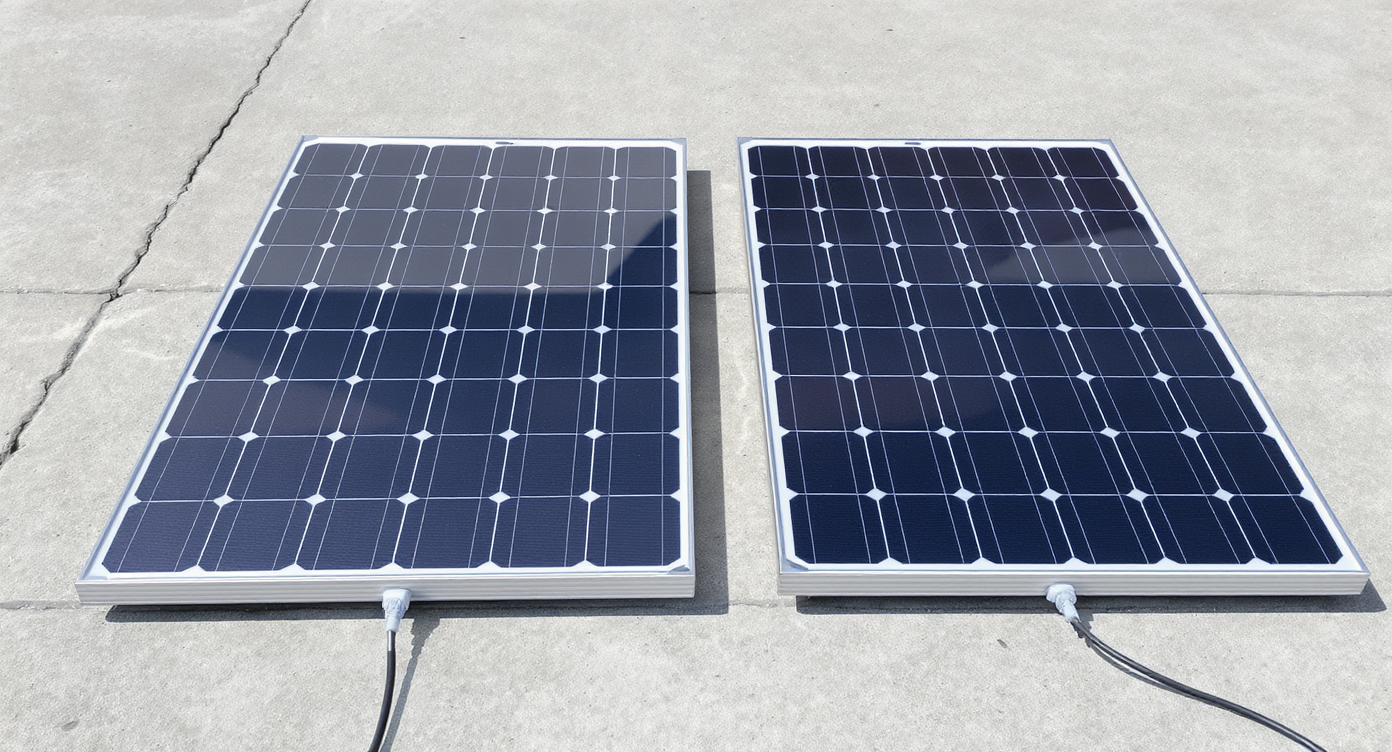
One of the most misunderstood aspects of any solar generator review is solar charging performance. A unit rated for 900W solar input doesn’t automatically charge at 900W — that’s the ceiling under laboratory-perfect conditions (peak sun, ideal panel angle, optimal temperature, zero shading). Real-world charging rates are typically 60–75% of that rated maximum.
Bluetti uses MPPT charge controllers (Maximum Power Point Tracking — a technology that continuously adjusts the electrical operating point of the panels to extract maximum available power). This is the right technology for the job and performs noticeably better than the older PWM (Pulse Width Modulation) controllers found in budget units. In practical terms, MPPT means you lose less energy during partial shading and during the morning/evening hours when panel output is lower.
Insider Tip: When pairing panels with a Bluetti 2400Wh unit, check the maximum open-circuit voltage (Voc) the unit accepts — typically 150V for the AC200MAX. Series-connecting panels (wiring them end-to-end to add voltages) can dramatically improve charging efficiency in low-light conditions, but exceeding the Voc limit will damage the charge controller. Always calculate your panel array’s combined Voc before connecting.
Honest Pros & Cons of Bluetti 2400Wh Solar Generators
- ✅ LiFePO4 chemistry: Longer cycle life (3,000–3,500 cycles to 80% capacity) compared to standard lithium-ion. More stable chemistry with a better safety profile.
- ✅ Expandability (AC200MAX): The ability to add battery modules is rare at this price point and genuinely extends the unit’s useful life.
- ✅ Multiple output types: AC outlets, USB-A, USB-C, DC barrel, and car-socket outputs cover virtually every device you’d need to power.
- ✅ Dual charging: You can charge via solar and AC wall power simultaneously, cutting recharge time significantly.
- ❌ Weight: These units run 60–70+ lbs. Not truly portable in the backpack sense — more “relocatable.”
- ❌ No pass-through for whole-home circuits: You’ll need a transfer switch and professional installation to integrate with your home’s panel — it’s not plug-and-play for home backup the way a standby generator is.
- ❌ Price: Quality LiFePO4 units at this capacity aren’t cheap. Budget accordingly, and be skeptical of dramatically cheaper alternatives claiming equivalent specs.
- ❌ App reliability: Bluetooth connectivity has been inconsistent for some users across firmware versions.
How Does Bluetti Compare to Other Brands at This Capacity?
At the 2,000–2,500Wh tier, Bluetti competes with EcoFlow, Jackery, and Goal Zero, plus a handful of smaller brands. Compared to Goal Zero’s lineup, Bluetti generally offers more capacity per dollar and faster solar input, though Goal Zero has a longer track record and a robust ecosystem of compatible accessories. EcoFlow competes closely on charging speed with their X-Stream technology, but Bluetti’s LiFePO4 chemistry gives it a longevity edge over EcoFlow’s NMC (Nickel Manganese Cobalt) battery units.
If you’re cross-shopping across brands, it’s also worth reading Generac solar generator reviews for a sense of how traditional generator brands approach the solar-integrated market, and Lion solar generator reviews for another LiFePO4-focused competitor. Each brand has genuine strengths depending on your priorities.
Top Bluetti 2400Wh-Class Models Worth Buying Right Now
Bluetti AC200MAX
Brand: Bluetti | Capacity: 2,048Wh | AC Output: 2,200W continuous (4,800W surge) | Solar Input: Up to 900W | Battery: LiFePO4 | Expandable: Yes (B230/B300 modules)
Best for: Home backup users who want to start with a solid base and expand capacity later without buying a new unit. The expandability is the headline feature here.
Bluetti AC240
Brand: Bluetti | Capacity: 2,048Wh | AC Output: 2,400W continuous | Solar Input: Up to 1,200W | Battery: Semi-solid-state LiFePO4 | Expandable: Yes
Best for: Off-grid users who rely primarily on solar charging and need the fastest possible recharge window during daylight hours. The higher solar input ceiling is a real operational advantage.
Bluetti AC300 + B300 Bundle
Brand: Bluetti | Capacity: 3,072Wh per B300 module (scalable up to 12,288Wh) | AC Output: 3,000W continuous (6,000W surge) | Solar Input: Up to 2,400W | Battery: LiFePO4
Best for: Serious home backup or off-grid cabin setups where you need the most power flexibility. Overkill for casual use, but genuinely impressive for sustained multi-day outages or high-draw environments.
Bluetti PV200 Solar Panel (Companion Pick)
Brand: Bluetti | Output: 200W | Type: Foldable monocrystalline | Connector: MC4 compatible
Best for: Pairing with any Bluetti 2400Wh unit. Two or three PV200 panels in series will approach the AC200MAX’s solar input ceiling efficiently without overcomplicating the wiring setup.
Insider Tip: Bluetti frequently runs promotional bundles that include one or two solar panels with the power station at a meaningfully reduced combined price. If you’re buying both anyway, timing your purchase around a sale event (Black Friday, Prime Day, or their own site promotions) can save you $200–$400 on a bundle versus buying separately.
Frequently Asked Questions About Bluetti 2400Wh Solar Generators
Can a Bluetti 2400Wh unit power a whole house during an outage?
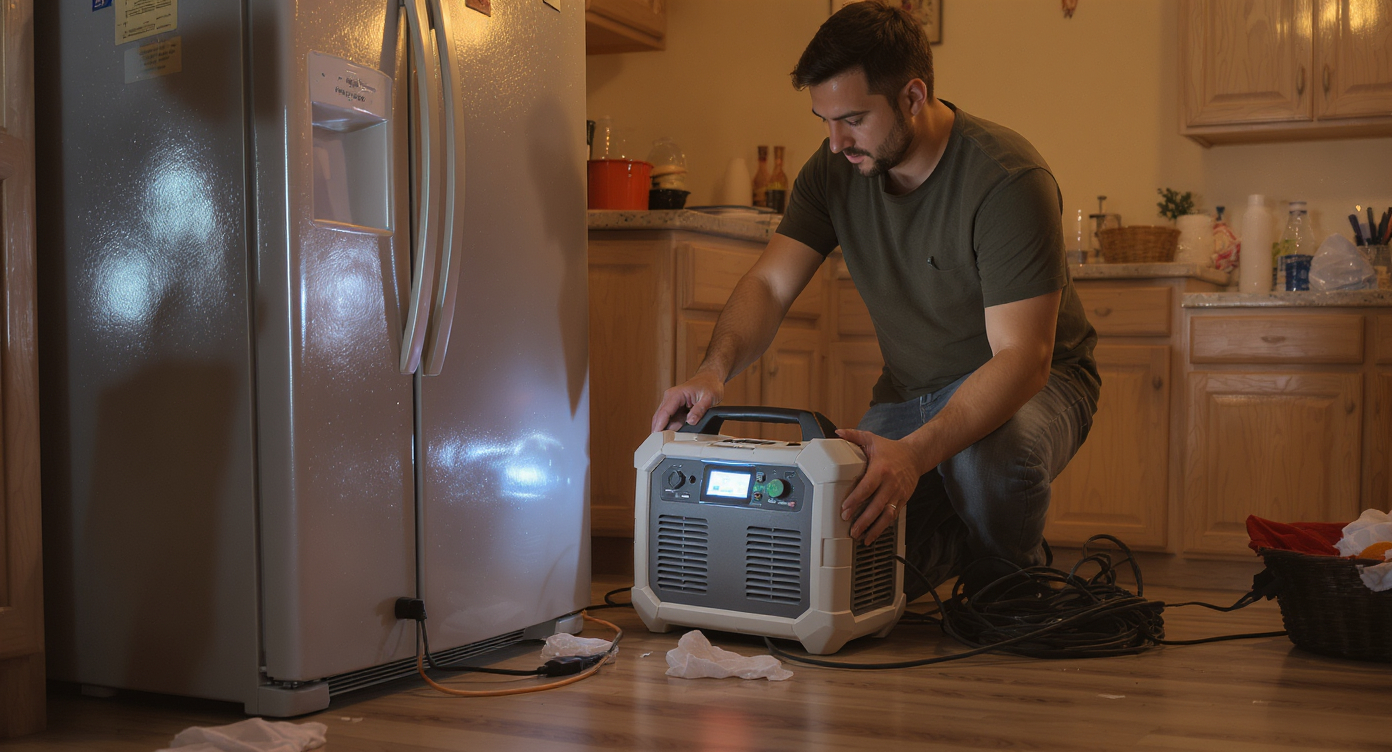
Not in the traditional sense — it won’t run central HVAC, electric stoves, or electric water heaters. But it can power essential circuits: refrigerator, lights, phone charging, internet router, medical devices, and a window AC unit. Think of it as selective backup rather than whole-home backup. For true whole-home coverage, you’d need a larger system or a traditional standby generator.
How long does it take to recharge from solar panels?
With a 400W panel array under good sun conditions, expect roughly 6–8 hours to fully recharge a 2,048Wh unit. With 800W of panels (near the AC200MAX’s input ceiling), that drops to around 3–4 hours. The AC240’s 1,200W input ceiling can theoretically cut that to 2–2.5 hours with a properly sized array.
Is LiFePO4 really worth the premium over standard lithium?
For a unit you plan to use regularly over many years, yes. LiFePO4 batteries typically handle 3,000+ full charge cycles before noticeable capacity degradation, compared to 500–1,000 cycles for standard NMC lithium. If you cycle the battery daily, that’s the difference between roughly 3 years and 8+ years of useful life. The chemistry is also more thermally stable, which matters for safety during high-load operation.
Can I use a Bluetti unit while it’s charging from solar?
Yes — this is called pass-through charging, and Bluetti’s 2400Wh-class units support it. You can draw power from the unit while solar panels are simultaneously replenishing the battery. Just be aware that consistently running the battery at partial charge (neither fully charging nor fully discharging) is actually gentler on LiFePO4 chemistry than full cycles.
How does Bluetti compare to smaller portable units for occasional camping use?
Honestly, a 2400Wh unit is probably overkill for weekend camping unless you’re running a lot of equipment. For lighter camping use, units in the 500–1,000Wh range are easier to carry and much more affordable. Check out Flashfish solar generator reviews or the PowerSource 1800 solar generator review for capable options at a lower capacity and price point. The Bluetti 2400Wh tier is really built for sustained, multi-day, or home-backup scenarios.
What warranty does Bluetti offer on these units?
Bluetti typically offers a 4-year warranty on their power stations and a 2-year warranty on solar panels, though terms can vary by region and model. Always verify current warranty terms directly on Bluetti’s website at the time of purchase, as these have changed with newer product releases.
Conclusion: Is a Bluetti 2400Wh Solar Generator Right for You?
After digging through the specs, real-user feedback, and hands-on testing data, the verdict on Bluetti’s 2400Wh-class solar generators is genuinely positive — with clear-eyed caveats. These are well-built, honest-performing units with LiFePO4 longevity, meaningful solar input, and useful expandability options that competitors at this price point often skip. They’re not the lightest, not the cheapest, and not a substitute for a whole-home standby generator. But for what they are — capable, reliable, solar-ready power stations for home backup, off-grid living, and extended off-grid trips — they deliver.
If you’re still comparing options across brands, don’t skip the broader research. Take a look at Patriot solar generator reviews for a different approach to the backup power category, or explore Be Prepared solar generator reviews if emergency preparedness is your primary motivation. And if you want to see how smaller companion units might complement a larger Bluetti setup, the Patriot Power Sidekick is worth a look as a lightweight supplement.
Your next step: decide which of the three use cases fits you best — home backup, off-grid primary, or extended travel — and let that drive your model choice. The AC200MAX is the safe, expandable pick for most buyers. The AC240 earns its premium if solar charging speed is a priority. And if you need maximum capacity from the start, the AC300 + B300 bundle is in a different league entirely. Whichever direction you go, you’re working with a brand that’s earned its reputation through consistent real-world performance.